Caught My Eye Today

Introducing Caught My Eye Today, a new weekly series in which we will post a photograph of something in the collection that deserves a second look.  In this age of whirling and intangible information and the deafening chatter about all things digital, the artifactual value of physical objects often reaches out, grabs hold and demands our attention.  In this series we will obey the call of the material and quietly look longer, harder and again at what we have collected.  Look for a post this week.

Collections now available

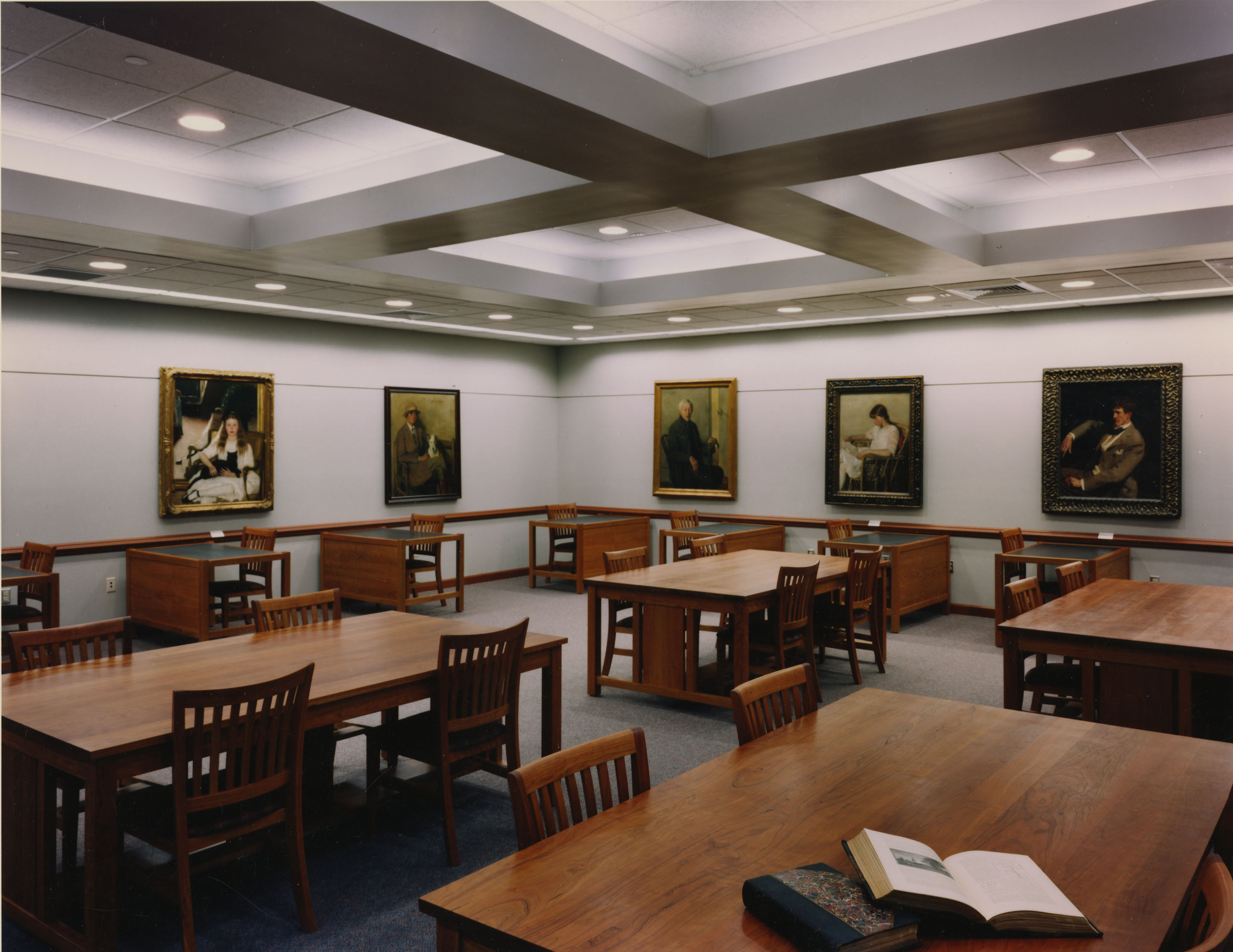
John P. McDonald Reading Reading Room, Archives & Special Collections

Below is a list of collections that are now open and available for research (links to finding aids provided), arranged by broad collecting area.  Researchers are encouraged to contact the staff with any questions.

Business, Railroad  & Labor Collections:

AFSCME, Local 1303  Records https://archivessearch.lib.uconn.edu/repositories/2/resources/49

  • Articles related to a strike by employees of the Milford Mental Health Clinic in 1983.

Bartholomew Alpress & Co. Records  https://archivessearch.lib.uconn.edu/repositories/2/resources/123

  • Record books of the saw mill located in Bristol, Connecticut.

Iron Workers Association of Reading, PA  https://archivessearch.lib.uconn.edu/repositories/2/resources/924

  • Notebook with handwritten constitution and by-laws of association.

Norwich Typographical Union Records https://archivessearch.lib.uconn.edu/repositories/2/resources/84

  • Financial records of the Union.

Providence & Worcester Railroad  Records https://archivessearch.lib.uconn.edu/repositories/2/resources/832

  • Treasurer’s accounts, treasury books, superintendent’s letters, deeds, and other administrative files.

William B. Young Collection of the Connecticut Co. https://archivessearch.lib.uconn.edu/repositories/2/resources/911

  • Correspondence, maps, photographic images, car rosters, administrative reports, and other materials about trolley and street railroad cars and the history of the Connecticut Company.

Children’s Literature Collections:

Martha G. Alexander  Papers https://archivessearch.lib.uconn.edu/repositories/2/resources/851

  • Manuscripts, dummies, and proofs for a significant number of published works by noted children’s author.

Paul W. Catanese  Papers  https://archivessearch.lib.uconn.edu/repositories/2/resources/899

  • Manuscripts and correspondence associated with two of Mr. Catanese’s books, “The Brave Apprentice” and “The Thief and the Beanstalk.”

Bonnie Christensen  Papers https://archivessearch.lib.uconn.edu/repositories/2/resources/71

  •  Original illustrations, woodcut blocks, research materials, and manuscript materials associated with the children’s author.

Stephanie Clayton Collection of Little Red Riding Hood https://archivessearch.lib.uconn.edu/repositories/2/resources/914

  • Assorted realia related to, and depicting, the Little Red Riding Hood Fairy Tale. The collection contains stuffed animals, dolls, porcelain figures, and a clock.

Joanna Cole Papers           https://archivessearch.lib.uconn.edu/repositories/2/resources/852

  •  Editorial correspondence, manuscripts and sketches of Cole, author of the Magic School Bus series.

Mary DePalma Papers        https://archivessearch.lib.uconn.edu/repositories/2/resources/873

  • Materials used to create several of Ms. DePalma’s works, such as My ChairThe Strange EggMany Millions of LeavesA Grand Old TreeThe Perfect Gift, and  The Nutcracker Doll.

Mary Greenwalt Papers      https://archivessearch.lib.uconn.edu/repositories/2/resources/919

  • Illustrations of her works on the lives of famous composers published between 1936 and 1946.

Mary Ann Hoberman Papers https://archivessearch.lib.uconn.edu/repositories/2/resources/115

  • Manuscripts, original artwork, poetry, and various administrative records associated with the work of award winning children’s author.

Nonny Hogrogian  Papers     https://archivessearch.lib.uconn.edu/repositories/2/resources/35

  • Illustrations, drawings, and proofs of works by children’s book author and illustrator.

Kathy Jakobsen Papers      https://archivessearch.lib.uconn.edu/repositories/2/resources/853

  • Artwork, audio visual materials, books, color slides, correspondence, drawings, illustrations, photographs, posters, publications, sketches, and videocassettes documenting the work of one of America’s premier folk artists.

David Katz Papers              https://archivessearch.lib.uconn.edu/repositories/2/resources/896

  • Materials relating to Katz’s publication You can be a woman engineer published in 1995.

Judith Liberman Papers      https://archivessearch.lib.uconn.edu/repositories/2/resources/850

  • Correspondence and original manuscript materials of artist and author.

Arnold Lobel Papers           https://archivessearch.lib.uconn.edu/repositories/2/resources/831

  • Original text and artwork produced by children’s book author and illustrator.

William MacKellar  Papers  https://archivessearch.lib.uconn.edu/repositories/2/resources/510

Movable Book Society Records  https://archivessearch.lib.uconn.edu/repositories/2/resources/898

  • Records of the Society.

Society of Children’s Book Writers & Illustrators (NE) Records https://archivessearch.lib.uconn.edu/repositories/2/resources/907

  • Records of the Society.

Catherine Stock Papers      https://archivessearch.lib.uconn.edu/repositories/2/resources/849

  • Works of art, dummies, and gallery proofs.

Weston Woods  Records    https://archivessearch.lib.uconn.edu/repositories/2/resources/212

  • 25 animation celluloids used in the creation of children’s filmstrips by the Weston Woods Studio.

Hans Wilhelm Papers https://archivessearch.lib.uconn.edu/repositories/2/resources/112

  •  Dummies, illustrations, books (4), works of art, preliminary sketches, photographs, fliers, posters, ephemera (calendars), and postcards related to Hello Sun!

Human Rights Collections:

Adam Nadel Photography Collection  https://archivessearch.lib.uconn.edu/repositories/2/resources/780

  • Large scale photography by Pulitzer Prize nominated photojournalist.

Diana Rios Collection of Ethnic Press Newspapers  https://archivessearch.lib.uconn.edu/repositories/2/resources/843

  • Ethnic newspapers from across the United States that are made available for teaching purposes.

World Education Fellowship Records  https://archivessearch.lib.uconn.edu/repositories/2/resources/39

  • Administrative records, correspondence, fliers, notes, and transcripts from 1969-1992.

A. B. Xuma Papers             https://archivessearch.lib.uconn.edu/repositories/2/resources/170

  •  Microfilm version of papers of anti-apartheid activist A. B. Xuma.

Literary Collections:

Merrill Gillespie Papers       https://archivessearch.lib.uconn.edu/repositories/2/resources/396

  • Correspondence from Michael Rumaker to Merrill Gillespie.

Oliver Jensen Papers https://archivessearch.lib.uconn.edu/repositories/2/resources/830

  • Personal and professional papers of Oliver Ormerod Jensen, writer, editor, self-taught historian, and railroad enthusiast.

Harriet Slavitz Papers  https://archivessearch.lib.uconn.edu/repositories/2/resources/119

  • Manuscripts, journals, notebooks correspondence and audio recordings of poet, essayist, freelance writer, book editor, and instructor.

Photograph Collections:

Mary Lou Estabrook Photographs  https://archivessearch.lib.uconn.edu/repositories/2/resources/876

  • Documents the photographic work of Mary Lou Estabrook in her capacity as Associate Editor and Chief Photographer of the Lakeville Journal, 1971-1986.

Political & Public Polling Collections, Personal papers:

Alumni Legislators Collection  https://archivessearch.lib.uconn.edu/repositories/2/resources/85

  • Ephemera, fliers, photographs, postcards, publications, and realia related to Connecticut State Legislators who were graduates of the University of Connecticut.

Arthur W. Fanta Papers https://archivessearch.lib.uconn.edu/repositories/2/resources/920

  • Reflects his work at the Nuremberg War Trials from 1945-1948.

Camille Forman Papers  https://archivessearch.lib.uconn.edu/repositories/2/resources/153

  • Administrative records, clippings, correspondence, ephemera, galley proofs, and financial records of local author.

Sam Gejdenson Papers  https://archivessearch.lib.uconn.edu/repositories/2/resources/889

  • Congressional records of Sam Gejdenson, U.S. Representative from Connecticut’s 2nd Congressional district, 1981-2000.

Paul K. Perry Papers  https://archivessearch.lib.uconn.edu/repositories/2/resources/205

  • Correspondence, reports, studies, polls and similar materials related to the personal and professional interests of noted Gallup organization employee.

John Rowland Papers https://archivessearch.lib.uconn.edu/repositories/2/resources/66

  • Congressional records from 1985 to 1991 from Connecticut’s fifth district, including constituent correspondence from 1985 to 1990, campaign and congressional newsletters, press releases, and legislative profiles.

Charles Towne Papers  https://archivessearch.lib.uconn.edu/repositories/2/resources/78

  • Note cards, indexed alphabetically, and by subject of city editor of the Hartford Courant for 47 years.

Dexter Wilcomb Papers (Connecticut Soldiers Collection) https://archivessearch.lib.uconn.edu/repositories/2/resources/6

  • World War II memorabilia donated by Technician Third Grade, Dexter Wilcomb.

Jerry Wagner Political Collection  https://archivessearch.lib.uconn.edu/repositories/2/resources/98

  •  Materials from the political campaigns of Emilio Daddario and Hubert Humphrey and aspects of the political career of Toby Moffet

University Archives:

4-H Clubs of CT Records  https://archivessearch.lib.uconn.edu/repositories/2/resources/859

  • Numerous club publications, photographs, scrapbooks, slides, film, and administrative records of the 4-H Clubs of Connecticut which originated in 1913 with the establishment of the first club in Mansfield, Connecticut.

Accreditation Records https://archivessearch.lib.uconn.edu/repositories/2/resources/95

  • Administrative records pertaining to the University’s accreditation by the New England Association of Schools and Colleges.

Floyd Bass Collection of John E. Rogers https://archivessearch.lib.uconn.edu/repositories/2/resources/48

  • Clippings, sound recordings, books, an honorary degree, and research posters relating to Dr. John E. Rogers collected by Dr. Bass.

Norman Bender Papers  https://archivessearch.lib.uconn.edu/repositories/2/resources/917

  • Correspondence, notes, articles and publications created or collected by Mr. Bender during his tenure in the University of Connecticut, Cooperative Extension Service.

Richard D. Brown Papers https://archivessearch.lib.uconn.edu/repositories/2/resources/211

  • Course materials, student records and recommendations, papers and presentations, professional associations, and grant applications of UConn History professor Richard D. Brown.

Cell Stress Society International Records  https://archivessearch.lib.uconn.edu/repositories/2/resources/213

  • Records documenting the establishment, management, development and growth of the Cell Stress Society International and its associated journal publication on the Storrs campus of the University of Connecticut from 1995 to the present.

College of Agriculture and Natural Resources Records https://archivessearch.lib.uconn.edu/repositories/2/resources/179

  • Records of the College of Agriculture and Natural Resources.

Computing Committee Records  https://archivessearch.lib.uconn.edu/repositories/2/resources/57

  • Correspondence, clippings, administrative reporting, committe proceedings, notes, fliers (handouts), and publications related to the Computing Committee and their involvement in UCINFO.

Office of Institutional Research Records  https://archivessearch.lib.uconn.edu/repositories/2/resources/869

  • Administrative records, reports and clippings.

Ombudsman’s Office records https://archivessearch.lib.uconn.edu/repositories/2/resources/182

  • Administrative records, fliers, news clippings, and legal documents from the period the office existed at the University.

Poetic Journeys Collection  https://archivessearch.lib.uconn.edu/repositories/2/resources/104

  • Posters from the Poetic Journeys Galleries from 2000-2004.

Puerto Rican and Latino Studies Institute Records  https://archivessearch.lib.uconn.edu/repositories/2/resources/901

  • Correspondence, minutes, printed materials, and financial records of the Institute.

Carl W. Rettenmeyer Papers  https://archivessearch.lib.uconn.edu/repositories/2/resources/208

  • Correspondence and field notes of noted biologist.

Cynthia Reeves Snow Collection  https://archivessearch.lib.uconn.edu/repositories/2/resources/148

  • Diploma, report card, dance program and publications from one of the early female graduates of the University.

Storrs Agricultural Experiment Station Records https://archivessearch.lib.uconn.edu/repositories/2/resources/40

  • Administrative records of one of the oldest agricultural experiment and research stations in the United States.

Storrs Draft Information Committee Records  https://archivessearch.lib.uconn.edu/repositories/2/resources/64

  • Administrative records, correspondence, legal documents, fliers, notes, and publications of the committee.

University Communications Office Records  https://archivessearch.lib.uconn.edu/repositories/2/resources/113

  • Files of the Office.

University of Connecticut Professional Employees Association (UCPEA) Collection https://archivessearch.lib.uconn.edu/repositories/2/resources/174

  • Administrative records, correspondence, legal documents, financial records, publications, and fliers (pamphlets, handouts, announcements), related to the Association.

University Poster Collection  https://archivessearch.lib.uconn.edu/repositories/2/resources/138

  • Posters documenting University events, particularly athletic activities, from 1969-2012.

Martin Luther King Jr. and “Why I Oppose the War In Vietnam”

“There comes a time when silence is betrayal,” Dr. Martin Luther King Jr. (1929-1968) said from the pulpit at Ebenezer Baptist Church in Atlanta on April 16, 1967, “I could never again raise my voice against the violence of the oppressed in the ghettoes without having first spoken clearly to the greatest purveyor of violence in the world today – my own government.”

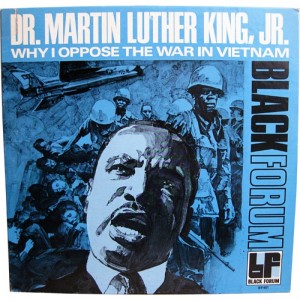
“Why I Oppose the War in Vietnam” – Dr. Martin Luther King jr. Dodd Center, Archives & Special Collections LP’s.

This edition of Martin Luther King Jr. day means many things this year.  A significant day to reflect on historical achievements in the United States for African Americans and people of color regarding civil rights and segregation,  and as a nation, its first African American Commander in Chief takes office today.  Though the Archives & Special Collections at the University of Connecticut may not contain Lincoln’s bible which will be used today in the swearing in of President Obama for his second term, we do have important materials that help contextualize why the issues of human rights for people of color in the United States and around the world matter now as ever.

A linkage between the US government’s role in violence in the third world during the War in Vietnam and the violence against people of color at home was a major topic of King’s speeches in the last year of his life.  Other important figures like Olaudah Equiano, Frederick Douglass, W.E.B. Du Bois,  Malcolm X and Angela Davis have also taken the stance on racism and human rights abuse to the internationalist position that a violence against people of color around the world is a violence to all.  On this inaugural day of the President of the United States, taking the steps of the building which he will stand upon, built by African Americans enslaved 150 years ago, will symbolize an overwhelming achievement in a nation’s history.  For the role of African Americans in the making of this country that has systematically seen its power turned to their oppression, the event symbolizes an equally outstanding time in history which lays deep within the meaning making of the citizen, the culture, and the class.  The struggles of African American draftees, Medgar Evers of the NAACP, Harriet Tubman and the underground railroad, Freedom Riders from North to South and The 54th Regiment of Massachusetts all became witness to the atrocity and injustice brought to their people.  The contextual archive, such as Why I Oppose the War in Vietnam, also bears witness to those injustices which continue on to lay the groundwork for the now, the tomorrow and thereafter.

“We as a nation must undergo a radical revolution of values, we must rapidly begin the shift from a thing oriented society to a person oriented society, when machines and computers, profit motives and property rights, are considered more important than people, the giant triplets of racism, extreme materialism, and militarism are incapable of being conquered. A true revolution of values will soon cause us to question the fairness and justice of many of our past and present policies…true compassion is more than flinging a coin to a beggar, it comes to see that an edifice that produces beggars needs restructuring.” – Martin Luther King Jr., April 4, 1967.

Materials on Civil Rights and Human Rights can be found at the Dodd Center’s Archives & Special Collections such as the LP Why I Oppose the War in Vietnam.  For access to other radical LP’s from our Alternative Press Collection, please contact the Curator.

A Historical Comic Book of the Southern New England Telephone Company

[slideshow_deploy id=’3338′]

In January 1878 George Coy founded the District Telephone Company of New Haven, Connecticut, less than one year after telephone inventor Alexander Graham Bell demonstrated his invention at Skiff’s Opera House in that city.  Coy’s new company was the first commercial telephone company in the world.

Seventy-five years later, in 1953, the company now known as the Southern New England Telphone Company produced a charming comic book — Pioneering the Telephone in Connecticut — to celebrate its history.  In 1998 the company records were donated to Archives & Special Collections, and the comic book was among the materials.

Here are just a few cells of the comic book, a captivating way to learn about this important company’s history.

Grants for Research: Apply Now For Spring/Summer Travel

Scholars and graduate students whose research requires use of the collections held by Archives and Special Collections at the Thomas J. Dodd Research Center are invited to apply for travel grantsApplications must be received by January 30, 2013 for travel to the University of Connecticut between March and August 2013.  Grants up to $500 are made to graduate students and post-doctoral students, and established scholars are eligible for awards of up to $1,500.  Grants are awarded on a competitive basis to cover travel and accommodations expenses.  Details and application instructions can be found on the Strochlitz Travel Grant page online.

Criteria for selection include the scope and significance of the individual’s research project relative to the subject strengths of the repository collections, his or her scholarly research credentials, and letters of support.  We particularly seek applications from individuals whose research relates to the following fields of inquiry: Alternative and Underground Press in America, American Literature and Poetics, American Political History, Blues and African American Vernacular Music, Latin American and Caribbean Culture and History, Human Rights, Labor History, Public Polling History, and Connecticut and Railroad History, among others.  Contact Greg Colati, Director, with any questions.

Through the Lens of an Anthropologist: The Yellow Pages Dress

Carey MacDonald is an undergraduate Anthropology major and writing intern.  In her blog series Through the Lens of an Anthropologist, Carey analyzes artifacts found in the collections of Archives and Special Collections.

What began in January 1878 as George Coy’s and Morris Tyler’s New Haven District Telephone Company serving a mere 21 customers in New Haven, Connecticut, ultimately became the Southern New England Telephone Company (SNET) serving millions of customers by 1970.  SNET was a leading force in the evolution of modern communication systems.  Interestingly though, it was also a leading force in creating a profound sense of pride and loyalty among its employees.  What is most intriguing is how SNET achieved this.

Yellow Pages Dress

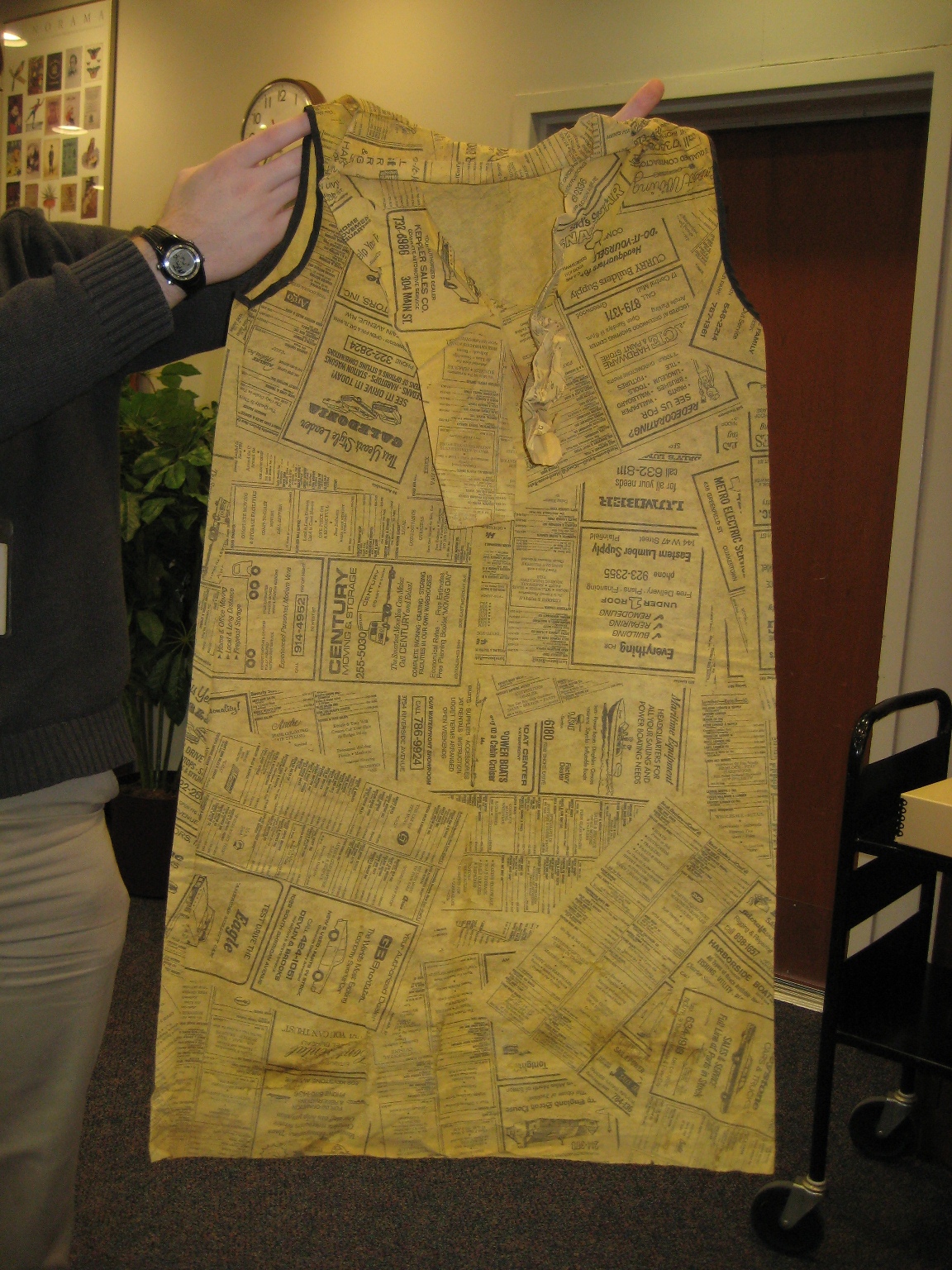
The ‘Yellow Pages Dress,’ found within the SNET Company Records, was a promotional item for the company’s Ecology Program that began gaining ground in 1968.  A second dress made of yellow pages is found in another grouping of SNET-related items known as the SNET Collection.  According to Laura Smith, Curator for Business, Railroad, and Labor Collections, when the second dress was donated in 2010 by Mr. Joseph Kennedy, a former SNET employee from 1948 to 1978, it was not cited as an Ecology Program promotional item like the first dress was.  However, despite this terminological difference, it is apparent that both dresses stem from the same period of the company’s history.

Both dresses are literally made of yellow pages paper – advertisements and all – which was recycled from old telephone directories, treated, and sewn together into a shift dress shape.  The dresses were made by the Waste Basket Boutique by Mars of Asheville, North Carolina, and some of the other dresses made by the Boutique are also found in the archives of the University of North Carolina Asheville.

Intriguingly, Laura Smith says that it is most likely that these dresses were not actually meant to be worn, but were instead given to employees as pieces of company memorabilia – as representations of the SNET institution as a whole.

Smith says that although both dresses show some slight tearing, they do not appear to have been worn habitually, or even just occasionally, by anyone, further suggesting that their purpose was simply to evoke employees’ loyalty to and pride in the SNET Company.  At a time when unionizing was very common, it was especially important for SNET to keep its employees content.  By organizing such events as sports games and by distributing such things as these yellow pages dresses, for example, SNET could maintain the structure of its business and avoid potential dissent among its employees.

Additionally, the dresses, particularly the one explicitly named as a promotional item for the Ecology Program, helped to foster company cohesion by forming a unifying environmental awareness among employees.  This awareness, in turn, helped SNET develop ecological policies aimed at making a greener Connecticut, as seen in the SNET Company Records collection.

For instance, in the early 1970s, SNET Company President Alfred Van Sinderen enlisted former Connecticut Governor John N. Dempsey to act as an environmental consultant on the potential ecological issues of SNET operations.  Upon spending months in the field observing SNET Company operations, Dempsey wrote his 1977 report, “Impact.”  In it he declares that SNET employees would no doubt accept and support the Ecology Program as some employees freely articulated their sincere concern for the environment.  Dempsey also discusses the need for people in the higher-ranking managerial positions of the company to effect the actual implementation and maintenance of such a program.  Such things as the company dispersal of the 1977 Employee Education handbook, which contains tips for employees on how to be “green” and environmentally sound, worked to create an ecological consciousness within the company.

Ultimately, it appears that SNET developed the yellow pages dresses as part of a 1960s-1970s campaign to gain employees’ dedication to the company as a whole.  It also appears that since one of these dresses was made particularly for the Ecology Program, it was part of the same campaign to unite employees under a company-wide environmental consciousness.  Undoubtedly, the socially unifying and ecologically perceptive policies of Southern New England Telephone are utterly fascinating.  This artifact study looks at the SNET Company as a microcosm of the larger social world in that it demonstrates just how people initiate and contribute to a socially bonding experience or movement.  We can only hope, though, that those who initiate such a unifying movement do it for noble reasons and do it well.

Carey MacDonald, writing intern

121st anniversary of the Train Wreck at East Thompson, Connecticut, on December 4, 1891

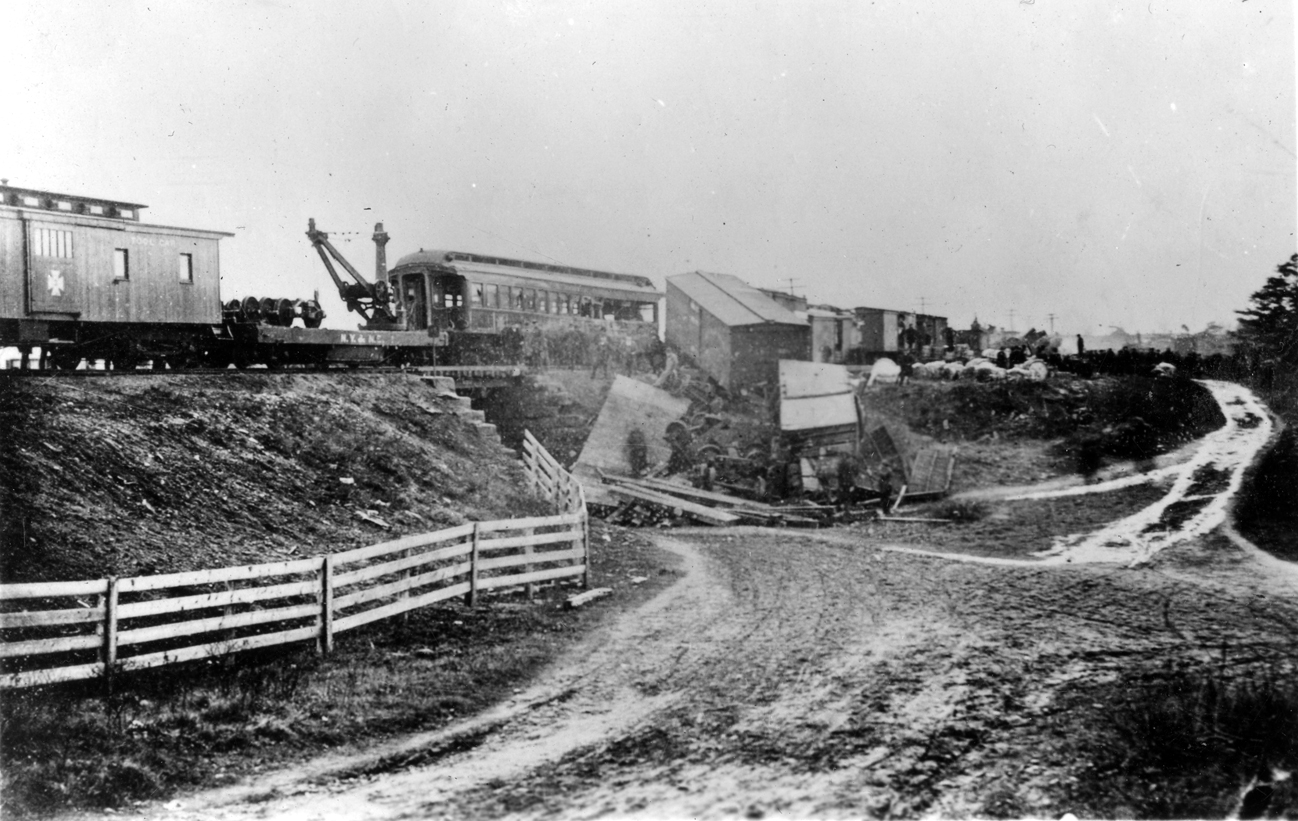
East Thompson train wreck, December 4, 1891

Known as “The Great East Thompson Train Wreck,” it involved four trains of the New York & New England Railroad: the Long Island and Eastern States Express from New York to Boston; the Norwich Steamboat Express from new London to Boston; the Southbridge Freight, a local train to Southbridge, Mass.; and freight train no. 212.

It started with the eastbound 212. To keep it from delaying the eastbound Long Island and Eastern States Express and the Steamboat Express, conductor William Dorman got orders in Putnam, Connecticut, to shift to westbound track no. 1, pass East Thompson and switch back to the eastbound track no. 2 in East Douglas, Massachusetts, 19 miles away. But no one notified the East Thompson station that an eastbound train was on the westbound track. As the train crew was coupling cars to the Southbridge freight train on the westbound track, Dorman’s freight train slammed into the engine. Several cars jackknifed and one was thrown across both tracks.

Moments later, the Long Island and Eastern States Express rounded the sharp curve at about 50 mph and crashed into the thrown car on track no. 2. The engine spun around, vaulted off the embankment, struck a telegraph pole and crashed. Steam plowed the soft gravel for about 150 feet and destroyed a home.

That crash killed Express engineer Harry Tabor and fireman Jeremiah Fitzgerald of Boston. Dazed trainmen tried to send a flagman to signal the Norwich Steamboat Express but it was too late. That train barreled around the curve and drove nearly 8 feet into the rear Pullman sleeper of the Long Island and Eastern States Express, setting the sleeper and engine cab on fire.

All this occurred in the space of 5 minutes.

Hundreds of passengers were injured. All four engines were destroyed, as were the sleeper and a baggage car, and the track was torn up for about 500 yards east of the passenger station.

Preheat the oven…

Kitchens across the United States are bracing for the beginning of the baking season marathon that commences every year just before the fourth Thursday in November and continues through the dropping of the ball signaling the arrival of the New Year.  So for those of you who may be bored or uninspired by the offerings of today’s celebrity chefs, the variety of cookbooks in the holdings of Archives & Special Collections may be what you’re looking for.  The collection contains a wide variety of cuisine for all palates.  A sample of the titles are shown below.

[slideshow_deploy id=3091]

The staff of Archives & Special Collections wishes everyone a very Happy Thanksgiving and best of luck in this baking season!

Betsy Pittman, University Archivist

Through the Lens of an Anthropologist: The Freshman Beanie

Carey MacDonald is an undergraduate Anthropology major and writing intern.  In her new series Through the Lens of an Anthropologist, Carey analyzes artifacts found in the collections of Archives and Special Collections. 

Sociocultural traditions pervade the human experience and provide a reliable mechanism for social cohesion.   It is commonly thought, though, that traditions are strictly old manifestations of an earlier cultural context, when, in actuality, they evolve and create a distinct reality for each successive generation.

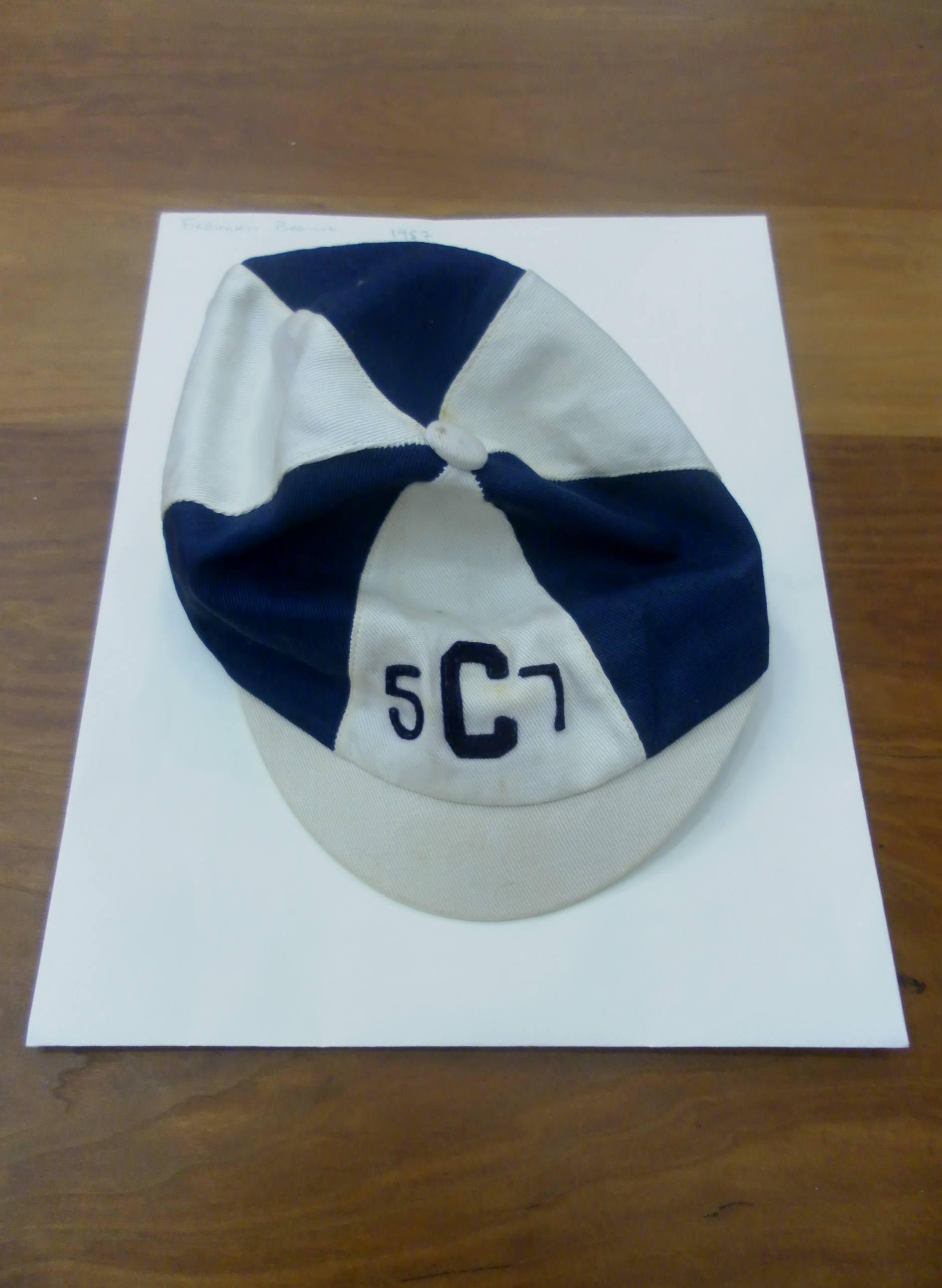
Yet traditions only evolve and persist for as long as their adherents maintain, reproduce, and reinforce them in their culture.  Such is the case of the college freshman beanie, a colored cap that freshmen were required to wear as a form of initiation into the greater university social setting.  According to the University Archivist Betsy Pittman, the tradition of wearing this cap was ubiquitous among American universities during the late nineteenth and twentieth centuries.  For younger generations though, this tradition no longer exists in the form that it once did, although there certainly exist other freshman initiation rites, particularly within the scope of Greek life, honor societies, and sports teams.  An example of the UConn freshman beanie tradition comes from the University Memorabilia Collection.

The crown of this beanie resembles a circus tent: it is patterned by six alternating blocks of navy blue and white (university colors) and is held together in the center by a white fabric-covered fastener.  An insignia of ‘5 C 7’ is embroidered on the front of the cap above the narrow, white brim.  ‘5’ and ‘7’ are placed on either side of ‘C’ in a thin, navy blue felt font and represent that freshman class’s graduating year – in this case, the class of 1957.  ‘C’ is sewn in a larger, thicker, navy blue felt font and most likely represents Connecticut.  Also important is the name Eugene H. Starger, which is handwritten in what appears to be thin permanent marker or black pen on the inside rim of the hat.  It seems that Eugene got a lot of use out of his beanie since it is stained; it is apparent that he wore this beanie more than once, as it was a necessary part of his attire for at least some time.

We see the first evidence for the freshman beanie tradition in a student handbook from the academic year of 1921-22 called The Handbook of Connecticut Agricultural College.  In the handbook’s “Message of ’24 to ’25” – as it was written by the class of 1924 to the incoming class of 1925 – we see abrupt, intimidating, student-to-student language used to enforce the university’s traditions:

As your infantile brain could not possibly assimilate the significance of a proper beginning, tradition places the burden of guiding you through this, your first year at C.A.C. on the broad, capable shoulders of the Class of 1924…Transgress sacred College Tradition and never…will the haunting memory cease to picture that terrible night when you so unexpectedly disturbed the Waters of Swan Lake.

This message is clearly intended to ensure that no freshman would ever “transgress sacred College Tradition,” capital letters and all, because if they did, they’d be punished and thrown into the lake.  The handbook continues by giving freshmen explicit instructions for using the beanie.  They were to wear this distinct cap and conform to the rules.  Sophomores were to distribute the caps and enforce the rules.

Thirty-two years later, the student-written Husky Handbook of 1953-54 – the same year that Eugene H. Starger was a freshman – requires freshmen to wear their purchased beanie until the ‘season’ is over.  The season ended if the freshmen won the Frosh-Sophomore Rope Pull contest across Mirror Lake during the first month of school, but if the sophomores won, then the freshmen would have to wear their beanies until Thanksgiving break.

Most importantly, the handbook explains the overall significance of wearing the beanie: the upperclassmen wanted to know who the freshmen were so that they could meet and help them more easily. Interestingly, this section ends by saying, “Wear your Beanie with pride, because we are proud to number you as ‘one of us.’”  Betsy Pittman expands on this notion by describing that the ‘controlled ritual’ of wearing the freshman beanie signaled to others one’s commitment to the university, its culture, and its people.  She also remarks that since the upperclassmen had to wear a beanie during their first year too, the student body in general had this experience to which they could all relate.  This would, in effect, foster a beneficial sense of community, and ultimately, as Pittman says, the “beanie is a physical manifestation of that community.”

Carey MacDonald, writing intern

Planning in advance for (another) nor’easter

COSTEP-CT, a group based in Connecticut that encourages disaster preparedness and recovery in the state by individuals as well as organizations, has developed some basic guidelines for recovery efforts for storm damaged family heirlooms and antiques.

The guidelines describe basic activities for  cleaning and drying water-damaged materials including paper based items, framed artwork, photographs, textiles, leather, bone/ivory, metal and sound and video recordings.  COSTEP-CT also provides contact information for materials requiring more than basic care.

Betsy Pittman, University Archivist

Through the Lens of an Anthropologist: Abbie Hoffman’s Socks

In her new series Through the Lens of an Anthropologistundergraduate Anthropology major and writing intern Carey MacDonald will analyze artifacts found in the collections of Archives and Special Collections.  ‘By asking a set of questions, I intend to reveal and highlight many intricate patterns of human behavior, such as social actions and customs, and the ways in which those patterns of behavior are represented in certain artifacts.” — Carey MacDonald

Clothing, as a fundamental, human form of expression, is symbolic of our cultural, social, and physical environments, as well as of our experiences and beliefs. T-shirts, jerseys, hats, pins – these things are worn as distinct symbols of an individual. But what about a pair of socks?

Abbott “Abbie” Hoffman, the Massachusetts-born activist and co-founder of the Youth International Party, or the Yippies, of the 1960s and ‘70s, is best known for his unabashed and public criticism of American government policies and politicians. He used calculated political theater to engage young people in the political and social issues of the time and to organize them in the effort to reform the government and the nation. Hoffman’s revolutionary ideology manifested itself in his own self-expression; he publicized his ideas by way of media coverage of his demonstrations, as well as through the very clothes he wore on his body.

In the collection of the Hoffman Family Papers we see that Jack Hoffman, Abbie’s younger brother, maintained regular correspondence with Abbie throughout his years of activism.  Jack later gained many of Abbie’s possessions, such as the aforementioned t-shirts, political pins, and, naturally, a dirty, well-worn pair of red, white, and blue socks that resemble the American flag. The socks’ knitting is worn away in the toes, heels, and calves, indicating their habitual use. Since he frequently wore them and kept them long enough for them to eventually reach his brother, these red, white, and blue socks must have meant something to Abbie. And they certainly mean something to us today about his life and his activism.

At the 1968 Democratic National Convention in Chicago, Abbie and eight other leaders and their Yippie followers held a demonstration against the war in Vietnam and pushed for social and political reform in Washington. In an amateur video taken of Abbie discussing the forthcoming demonstration in Chicago, he articulates his plan to take social action at the Convention for the exact purpose that there would be extensive media coverage of the goings-on. He expected that every hour or so during the televised Convention the cameras would cut from the politicians’ speeches to the Yippies’ demonstration, and the viewers would immediately be interested in what they were doing. In preparation for the demonstration, the mayor appeared on television constantly and stationed police forces and Secret Service agents in the city. In interviews with journalists prior to the event, Abbie likened the whole scene to an exciting football game, like the Rose Bowl. By implementing dramatic, theatrical tactics to capture the public’s attention, Abbie and his Yippie friends could deliver their message in the spotlight.

However, to the Mayor and politicians, the demonstration at the DNC was viewed as a violation of the Anti-Riot Act that had been established in April 1968 after the assassination of Martin Luther King, Jr. Similarly, the American flag t-shirt that Abbie wore during the ensuing trial of the demonstration leaders, who were known as the Chicago Seven, was perceived by the judge as a desecration of the flag, a national symbol that is meant to be revered.  By practicing these forms of political theater, Abbie Hoffman managed to create “an advertisement for revolution,” as he calls it in his 1968 book, Revolution for the Hell of It. As for his red, white, and blue socks, it is very possible that he wore them to be viewed as a defilement of the flag. Or, after he was acquitted of conspiracy in 1973, he may have worn them during the years that he was on the run after jumping bail for his arrest for cocaine possession.

Yet it is also conceivable that he wore them to promote his image of a new, reformed America. He could have been expressing his patriotism and hope to his fellow Yippies and Americans, and since he personally knew he was wearing them, they could have symbolized, for himself, his idealism and belief in social change.

Carey MacDonald, writing intern