Through the Lens of An Anthropologist: School of Home Economics Dresses

Carey MacDonald is an undergraduate Anthropology major and writing intern. This is the final post in Carey’s blog series Through the Lens of an Anthropologist, in which she analyzes artifacts found in the collections of Archives and Special Collections.

The School of Home Economics, which served as the foundation for the future School of Human Development and Family Studies at the University of Connecticut, educated university students, particularly women, in the skills of sewing, cooking, and generalized homemaking. The Clothing, Textiles, and Related Art major (CTRA) within the School of Home Economics specialized in clothing, dress, and costume design and construction. A small collection of Home Economics dresses found in the Archives contains several dresses from 1968, two of which are of particular interest because of their especially professional design.SAMSUNG DIGITAL CAMERA
The first is an orange and white shift dress made of thick corduroy. Its loosely sewn label provides us with the following information, “Designer Sportswear from Lord and Taylor, California Summer, 1968. Orange and white summer shift.” This would suggest that the dress was not made by a student but was produced by the department store, Lord and Taylor. Yet this is particularly confounding because Curator for Multimedia Collections Kristin Eshelman believes that the dress looks handmade. It is hard to determine whether this dress was only used in the classroom for students to model their work after or if it was actually produced in the classroom by a student.

This dress does provide some concrete evidence for its context: handwritten on the label is “E Hotte.” According to The University of Connecticut Bulletin 1968-69 General Catalog, Mrs. Eleanor Hotte was an associate professor for the Clothing, Textiles, and Related Art major within the School of Home Economics. She taught a semester-long, two-credit course in Costume Design which, according to the course catalog, provided students with the “opportunity to develop originality in the design of costumes and to appreciate line, color, and texture in relation to the human figure.” Interestingly, going back just one year to the catalog for the academic year of 1967-68, Eleanor Hotte was Eleanor Boettke. She taught a course called Research Problems with Mr. Hotte for at least that year, and it seems that by a year later she was married and had taken his name. This dress was therefore used in some fashion in one of Mrs. Hotte’s classes, most likely for Costume Design or another class called Dress Design.

SAMSUNG DIGITAL CAMERA

Another 1968 dress found in the collection is of a more fanciful stock; its label states, “Woman’s evening gown w/ palazzo pants is of turquoise polyester w/rhinestone trim at neck & midriff.” blogpic2 This flashy gown with widely flared palazzo pants was given as a gift, as the label also shows, “Gift: Mrs. Mary Majnich.” It is possible that a student gave this dress to Mrs. Majnich or that Mrs. Majnich gave this dress to university students. Since its label is of the same style as the shift dress’s label, it is probable that both dresses had the same, original context; they were either given to the university for students to use in class or were created by students at the university.

Ultimately, when it was in existence, the School of Home Economics was clearly seriously invested in training students to be skilled in clothing design and homemaking. Our recent cultural shift away from valuing home economics as a field of study is represented in the transformation of the School of Home Economics into the wider-in-scope School of Human Development and Family Studies here at the University of Connecticut.

Carey MacDonald, writing intern

Through the Lens of An Anthropologist: Learning the ABC’s

H is for Hero
Carey MacDonald is an undergraduate Anthropology major and writing intern. In her blog series Through the Lens of an Anthropologist, Carey analyzes artifacts found in the collections of Archives and Special Collections.

People, like parents and teachers, and things, like games and books, play significant roles in shaping a child’s understanding of the world. According to the Cambridge Guide to Children’s Books in English (“Alphabet Books” by Ann Rowe), alphabet books in particular have been in use since the 15th century to teach the alphabet to young children to prepare them for learning to read. The first alphabet books were called primers and were essentially prayer books that dedicated several pages to the alphabet. ABC books eventually became separate books from primers and utilized illustrations and short rhymes to represent each specific letter. We can see how the ABC books we know today came to be by looking into the wide-ranging collection of alphabet books in the Archives.

One such book from 2008, called “Z is for Zeus: A Greek Mythology Alphabet” and written by Helen L. Wilbur and illustrated by Victor Juhasz, comes in a large, hardcover picture book form with a plastic overlay. The beginning pages are filled with information about how Greek mythology is useful in modern times. The “Why It’s Greek to You” section describes this when it says, “By reading and studying the myths and their culture you can expand your understanding of the words, their meanings, and symbols, making them no longer Greek to you.”

This section also explains that the names of many modern-day words, places, products, companies, and organizations are derived from Greek mythology. Nike, for instance, is known as an athletic apparel brand to us but was originally known as the Goddess of Victory to the ancient Greeks. After introducing the relevance of myths to today’s world, the book continues by aligning letters of the English alphabet with various aspects of Greek mythology. Each letter is reflected in a finite, four-line poem that is written in a typical, sing-song AABB rhyme scheme. Historical explanations of each letter’s representative word are also provided on each page. Whimsical, colorful, caricature-like illustrations further describe the represented letter. The people’s exaggerated facial features – particularly their big eyes and noses – would be comical to a child and thus captive of his or her interest.

Furthermore, the letters symbolize such curious things as gods and goddesses, for the letter G, who reside in Olympus, for the letter O, as well as Sirius, the brightest star in the sky, for the letter S. By remarking on such intangible, ambiguous, and distant things as god(s) and the constellations, this alphabet book brings into focus two difficult subjects of human conjecture which a child, as we can imagine, can only understand to a limited extent.

Other letters symbolize character traits; for instance, the letter H is represented by heroes and the heroic qualities that children are taught to demonstrate: “Fearless deeds are just one part of the heroic creed. You must have heart, nobility, show reverence, and strive in all for excellence.” Similarly, the letter K is represented by King Midas in that “King Midas will tell you if you’re very bold and ask that all you touch turns to gold, what seems like a blessing will make you feel cursed.” Still other letters attempt to explain the origin of humans. bible_blog For instance, from Chaos, for the letter C, “came the earth and the heavens, the ocean and light,” and the Fates, for the letter F, “determine at your birth your length of time upon this earth.”

Like this alphabet book from 2008, a hard paper alphabet primer from 1913, which is entitled “The Noah’s Ark Primer” and was produced by the G.C. Hanford Manufacturing Company of Syracuse, New York and distributed by “druggist” U.C. Becker, is written in an AABB rhyme scheme and aligns the letters of the alphabet with the animals described by the Bible to be found on Noah’s Ark during the biblical deluge. Another primer, “The Bible Alphabet,” published in 1860 by Sheldon & Co. of New York, New York, differs from the 20th and 21st century books in that it is made of cloth and is written in ABCB rhyme scheme. It is similar however, particularly to the 1913 book, in that it aims to teach children the English alphabet while also introducing them to Biblical figures.

In essence, each of these alphabet books functions as an educational tool both scholastically and culturally. While the format and structure has changed over time, the basic, instructive premise of the alphabet book has remained the same. It is apparent that, since these books have been in production for the past six-hundred years, the instructional template of the alphabet book is timeless.

Carey MacDonald, writing intern

Sources for Research on Historic Properties in Connecticut


Goodspeed Opera House, East Hampton, Connecticut, from the Connecticut Historic Preservation Collection, Archives & Special Collections, University of Connecticut Libraries.

Goodspeed Opera House, East Hampton, Connecticut, from the Connecticut Historic Preservation Collection, Archives & Special Collections, University of Connecticut Libraries.

The architectural surveys in the Connecticut Historic Preservation Collection are a tremendous source for those who are researching historic properties in the state, and one of our most regularly requested collections here in the archives. But there are several other ways to find information about historic properties, including:

The Historic American Buildings Survey at the Library of Congress: http://www.loc.gov/pictures/collection/hh/

The National Park Service’s National Register of Historic Places: http://nrhp.focus.nps.gov/natreghome.do?searchtype=natreghome

The Connecticut State Library’s database of 1930s WPA Architectural Surveys/Census of Old Buildings in Connecticut: http://cslib.cdmhost.com/cdm/landingpage/collection/p4005coll7

List of Historic National Landmarks in Connecticut: http://en.wikipedia.org/wiki/List_of_National_Historic_Landmarks_in_Connecticut

Let me know if you know of others so that I can add them to the list.

May 11 is National Train Day!

The New England Limited, better known as the White Train, or Ghost Train, which traveled from New York to Boston on the Air Line Division (formerly the Boston & New York Air Line Railroad) of the New York, New Haven & Hartford Railroad in the early 1890s.  Leroy Roberts Railroad Collection, Archives & Special Collections, University of Connecticut Libraries.

The New England Limited, better known as the White Train, or Ghost Train, which traveled from New York to Boston on the Air Line Division (formerly the Boston & New York Air Line Railroad) of the New York, New Haven & Hartford Railroad in the early 1890s. Leroy Roberts Railroad Collection, Archives & Special Collections, University of Connecticut Libraries.

Let’s get on board to celebrate National Train Day on Saturday, May 11!  Amtrak organizes this event to celebrate the ways trains connect us all and to learn how trains are an instrumental part of our American story. 

We here in the Railroad History Archive in Archives & Special Collections are celebrating this day by enjoying the rich resources in the collection that document how the railroad was pivotal to the lives of the people of New England in the Golden Age of Railroads in the late 1800s.  This photograph shows the New England Limited on the Air Line Division, formerly the Boston & New York Air Line, which was built to provide a direct route diagonally across the state of Connecticut to connect the important financial centers of New York City and Boston.  At the time this photograph was taken, in the 1890s, the B&NYAL was taken over by the New York, New Haven & Hartford Railroad and then known as the Air Line Division.  The New England Limited reminds us of a time when luxurious trains were ridden by the Gilded Era’s captains of industry.
Enjoy National Train Day at a station near you!  For more information about the celebrations, visit http://www.nationaltrainday.com/s/#!/

The Last Steam Trip on the New Haven Railroad, April 27, 1952

In the early 1950s the New Haven Railroad phased out use of its steam fleet in favor of its electric and diesel locomotives.  Shown here is a menu and photographs taken on an excursion trip from Boston’s South Station to New Haven, Connecticut, through the route of the old New York & New England Railroad with stops in Willimantic and New London, Connecticut.  The photographs were taken by Seth P. Holcombe and Ralph E. Wadleigh, both of whose photographs we hold in the Railroad History Archive.

Menu for New Haven Railroad's last steam trip, April 27, 1952.  Donated by Frank Morrissey, University Railroad Collection, Archives & Special Collections of the University of Connecticut Libraries.

Menu for New Haven Railroad’s last steam trip, April 27, 1952. Donated by Frank Morrissey, University Railroad Collection, Archives & Special Collections of the University of Connecticut Libraries.

Through the Lens of An Anthropologist: Women’s Liberation Movement In Song

http://www.queermusicheritage.us/apr2012a.htmlCarey MacDonald is an undergraduate Anthropology major and writing intern. In her blog series Through the Lens of an Anthropologist, Carey analyzes artifacts found in the collections of Archives and Special Collections.

The Alternative Press Collection contains a series of LP (long-play) record albums by female musicians of the twentieth century whose music reflects the first and second waves of the women’s liberation movement. Two of these LPs are the post-first wave Mean Mothers Independent Women’s Blues LP and the second wave era New Haven and Chicago Women’s Liberation Rock Bands’ Mountain Moving Day LP. Through the use of powerful, explicit lyrics and the moving techniques of blues and rock music, both LPs grapple with the issues of women’s rights, equality, and activism. They are timeless, auditory representations of the turbulent social contexts from which they came, and as such, they represent the century-long development of women’s rights awareness.

Volume 1 of the Mean Mothers Independent Women’s Blues album was produced in 1980 by Rosetta Reitz of Rosetta Records in New York, New York. According to Duke University Libraries’ Inventory of the Rosetta Reitz Papers, Reitz was a feminist writer, lecturer, and owner of Rosetta Records, which produced re-releases of female jazz and blues musicians’ songs from the early twentieth century. The LP’s gatefold cover, as mentioned by Graham Stinnett, the Curator for Human Rights Collections, contains biographical information about the female blues singers of the 1920s-1950s who are represented on this album.

Also, according to other content on the gatefold, the title’s term “mean mother” is meant as a compliment to all women, including those represented in the album, in that it is

a positive view of an independent woman, granting her the regard she deserves as one who will not passively accept unjust or unkind treatment.

The gatefold also states that these female singers were not just mourning lost love “in spite of the historic stereotyping imposed on them”, but were actually exploring every aspect of life through their music. These songs were created after the first historical wave of the women’s liberation movement ended in 1920, the year in which women were finally granted the right to vote. Yet despite the creation of this Constitutional amendment, the issue of women’s equality remained contentious. This is apparent when listening to the Mean Mothers album, which contains sixteen songs in total. For instance, Bessie Brown’s 1926 “Ain’t Much Good in the Best of Men Nowdays” laments that “married men have a tendency to roam,” while Bernice Edwards’ 1928 “Long Tall Mama” righteously claims that she is her own, independent woman and shall stand tall against adversity from men and other people in her life. On side B, Lil Armstrong’s 1936 “Or Leave Me Alone” ends with a long bluesy musical accompaniment, adding to the strength of the piece, much like Gladys Bentley’s deep, strong voice does in her 1928 song “How Much Can I Stand?” on side A.

Years later, during the second wave of the women’s liberation movement, The New Haven Women’s Liberation Rock Band and the Chicago Women’s Liberation Rock Band collaborated to create their 1972 nine-song album entitled Mountain Moving Day through Somerville, Massachusetts-based Rounder Records. The second wave was characterized by similar social issues pertaining to women’s rights but with particular regard to women’s equality in the workplace and a woman’s right to choose.

A woman’s right to choose is dealt with in the New Haven band’s “Abortion Song” in which Jennifer Abod and her accompanying vocalists demand for their right to choose singing, “Free our sisters; abortion is our right.” Their frequent use of “sister” works to establish a common sense of sisterhood between themselves and other women. This term is also heavily used in “So Fine” as in the lyric “Strength of my sisters coming out so fine.” While the New Haven band’s songs deal more with female sexuality, the Chicago band’s songs work to oppose stereotypical women’s gender roles in songs such as “Secretary” and “Ain’t Gonna Marry.”

Ultimately, these female bands produced music in a similar vein as their jazz and blues predecessors indicating their intent to develop and maintain a nationwide women’s rights consciousness that is rooted in the past century and yet relevant today.

Carey MacDonald, writing intern

Yellow Power, Yellow Soul: the radical art of Fred Ho

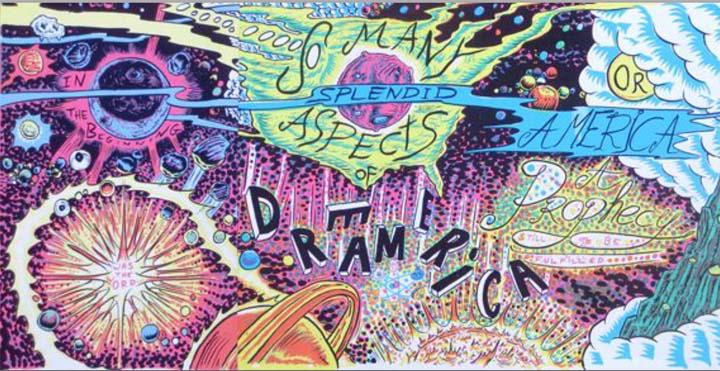
Last evening, I had the pleasure of meeting Fred Ho and hearing him speak at the book signing for Yellow Power, Yellow Soul: the radical art of Fred Ho, co-edited by Roger N. Buckley and Tamara Roberts, University of Illinois Press.  In attendance was filmmaker Steven De Castro who has made a video showcasing Fred Ho’s original clothing designs currently on exhibition at the Knox Gallery, Harlem, New York.  One of the many ways Fred Ho expresses himself.   Check it out.