Through the Lens of an Anthropologist: Scrapbooking Our University Roots

Carey MacDonald is an undergraduate Anthropology major and writing intern.  In her blog series Through the Lens of an Anthropologist, Carey analyzes artifacts found in the collections of Archives and Special Collections.

Although college customs tend to change over time, their social ramifications remain profound and everlasting.  We are able to observe these traditions and their impact on students from such artifacts as documents, photographs, or, in this case, from scrapbooks.

The University Scrapbook Collection contains the scrapbook of one Arthur J. Randall who was a student at Connecticut Agricultural College from 1916 to 1918 when Charles L. Beach (of Beach Hall) was the college’s president.  Randall’s scrapbook reflects his two years at C.A.C. in stunning detail and provides great insight into his personal college experience.  Needless to say, this scrapbook also outlines C.A.C.’s very own history and traditions and highlights the agricultural roots of what is now the University of Connecticut.

Arthur J. Randall’s scrapbook is a wide, bound, bright blue book that was printed by The College Memory Book Company of Chicago, IL and copyrighted in 1914.  It is called the “Memory and Fellowship Book” and is dedicated to the “Keepers of Keepsakes” in its inside title page.  The Latin phrase “Qui Transtulit Sustinet,” or “He Who Transplanted Still Sustains,” is featured in gold on the front cover below a gold emblem.  This same phrase is found on the Connecticut state seal, according to CT.gov.  “Conn. Agri. Coll.” and Arthur’s full name and graduating year of 1918 are etched below the emblem.  Also interestingly, the inside backing of the book shows the seals of several other American universities that must have also contracted out to The College Memory Book Company of Chicago.  Ultimately, the scrapbook’s elaborate imagery and design are indicative of the significance of collegiate history and tradition.

Moreover, Randall’s scrapbook includes such things as class registration cards, treasurer’s cards, boarding and dining cards, Athletic Association season tickets, post office box renting fee slips, and other miscellaneous charge slips.  He also kept many photographs of various buildings on campus, Horsebarn Hill, and his friends.

His scrapbook is, in essence, a repository of rather mundane items – but items that are nonetheless useful for our purposes.  We can glean from Randall’s collection that he was likely a typical, responsible, self-aware student, by today’s standards at least, as well as by the standards of his time.

Also interesting is Randall’s account of the campus goings-on.  First, he marks September 12, 1916 as “the beginning of my career” in the calendar section of his scrapbook.  His “Comparative Athletic Record” shows that he played recreational basketball on several occasions.  He notes the President’s Reception and Rope Pull – two traditional university events –in October of 1917, as well as the Halloween Masquerade, Benefit Dance for the Red Cross, and “first moving pictures” in November of the same year.

Randall also takes note of the fire that burned down the old chemistry building on the morning of November 27, 1917.  This major change in the university setting was certainly upsetting, hence his note that it was a “total loss.”  Essentially, in the academic year of 1917-18 Randall took note of many of the events he attended, which also included going to church services and Mansfield Grange meetings on a regular basis.  It is particularly interesting that he recorded the events of his second year more than his first, and perhaps this is because he felt inclined to preserve what was left of his college career.

Lastly, Randall even held onto many of his final exams, the likes of which he also discusses in his calendar notes.  By writing on January 21, 1918 about midyear exams that “to think of the next five days is enough to make you crazy,” Randall implies that the university view on exams was much like it is today: exams are stressful and throw everyone into a collective state of turmoil.  His class schedules included classes such as Veterinary Science, Agriculture, Farm Management, Animal Husbandry (which he deemed ‘killer’), Dairy Husbandry, Horticulture, Forestry, History, and, interestingly, Military Drill and Military Science.

Randall’s records further identify the founding of the University of Connecticut as an agricultural school, and his apparent interest in recording exactly that indicates his pride in and appreciation for the school.  It is from these roots that our university grew and diversified into the flagship research university that it is today.

Carey MacDonald, writing intern

Photographs from Archives & Special Collections part of an exhibit at the National World War II Museum in New Orleans


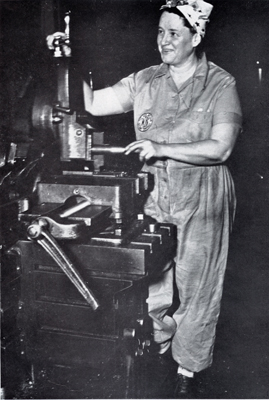
Employee of the New Britain Machine Company during World War II

 Several months ago I worked with Laura Blum, a student at E.O. Smith High School in Mansfield, Connecticut, who needed photographs from the Connecticut Business History Collections for a project she was working on for the National World War II Museum in New Orleans.  Laura was selected, with fifty other high school students in every state in the country and the District of Columbia, to provide images of how their states contributed to the challenges of World War II on the homefront.  Laura chose six photographs from our collections, all depicting Connecticut workers and the efforts they made on behalf of the war effort, and wrote an introduction.

The photographs that Laura chose are available in the Connecticut window of the Salute to Freedom website of the National World War II Museum, at http://salutetofreedom.org/.  We are happy that Laura used photographs from our collection for this national-oriented project and very impressed with the good work she did in highlighting and describing the photographs.

The museum blogged about the exhibit on December 31, 2012, available here: http://www.nww2m.com/2012/12/student-scholars-honor-local-contributions-to-wwii/

“Timmy Trapped on Mars”: What Makes Failed Pitches “Bad”? by Tanya Rose Lane

For almost two years, I have been blessed with the incredible opportunity to work under Terri Goldich, the curator for the Northeast Children’s Literature Collection located in the Thomas J. Dodd Research Center. That’s right– not only do I get to work hands-on with sketches, dummies, and correspondence from children’s authors and illustrators but I also get paid for it! My most interesting assignment, by far, has been performing the box inventory and description for the Mo Willems Papers. Hailing from New Orleans and a graduate of NYU’s Tisch School of the Arts, Mo Willems is a wildly successful children’s author, illustrator, animator, and Caldecott Medal recipient. With animation credits that include Sesame Street, shows on both Nickelodeon and Cartoon Network, plus the popular Pigeon book series, it is hard to believe that Mo Willems has entire boxes within his collection here dedicated to failed pitches. Why did some of Mo’s seemingly most fun and interesting ideas get rejected by editors and animation networks? But, alas, there must be reasons why some artists’ creative ideas never quite come to life and I set out to investigate those reasons.

The possible answer to my question lies within an overcrowded box deep within the shadows of the stacks (let me just note that, as a library assistant, the storage technique authors often use of stuffing every document they’ve ever owned into boxes that won’t hold all of them is both irritating and humorous). After I managed to yank the folder entitled “Failed Pitches” out of one of Mo’s boxes, I came across an interesting set of sketches and animation designs that were clearly from the beginning stages of an animated T.V. show. The show in question, “Timmy Trapped on Mars” was an idea that Mo pitched in 1998. The plot is essentially this: while on a walk through his suburban neighborhood, Timmy and his pet goldfish are abducted by a passing UFO. When taken to Mars, the aliens there identify Timmy’s fish Cleveland as a superior being. Cleveland soon is out to get Timmy for drowning him and feeding him nasty flakes daily while on planet Earth. Timmy’s only new friend, Bubba, is his guide while he is trapped on Mars. 

Artwork and animation: Willems, Mo. “Timmy Trapped on Mars”. May 1998. Mo Willems Papers, Box #4, “Failed Pitches”. Archives and Special Collections at the Thomas J. Dodd Research Center.  All rights reserved.  No reproduction of any kind allowed. 

When I went through Mo’s notes that accompanied his artwork, I soon saw how he tried to identify possible aspects of the animated show that might not have “worked” with networks.  It seems that in order to get the green light on this T.V. show, Mo would have had to find a way to have Timmy act as an active protagonist instead of a sad main character constantly “pining” for planet Earth. He would also need to find a way to make the main dynamic of Cleveland vs. Timmy interesting and turn their relationship into one that is more complicated and complex. In his notes, Mo mentioned that he wanted to explore the role reversal with the fish as the ruler and the boy as a pet. This is where I think things could have gotten complicated and potentially unattractive to television networks. Mo Willems is known for his dark, satirical work where he satirizes adult authority and rules, something that definitely works in projects like the Pigeon books. However, the idea of role reversal here and challenging rules might not have gone over well with T.V. producers. The outer space setting also brings attention to another topic wrought with tension, that being the environment. By going to outer space and switching things up, Timmy’s situation makes me think, at least as an adult, that perhaps we earthlings are the ones who have things backwards. All of this might have been viewed as too political for an animated show for children or, maybe, producers just thought the plot had no lasting power. Maybe there were too many animated shows in 1998 about outer space or goldfish; it could have been absolutely anything. What do you think?

Insight on a Fellowship

Glastonbury, Conn., English teacher David Polochanin was recently awarded the James Marshall Fellowship, as he pursues to write young adult literature as part of a yearlong sabbatical. During his research, he will write an occasional series of blog posts, based on his observations and insights relating to the contents of the Northeast Children’s Literature Collection at the University of Connecticut. Polochanin’s work has been widely published in major newspapers in New England, including The Boston Globe, Providence Journal, and Hartford Courant. His education writing has appeared in Education Week and Middle Ground, and his poetry has been included in an anthology by Native West Press, and will be published in the prose poetry journal Sentence.

Archives & Special Collections stacks
Photo in Archives & Special Collections stacks @ David Polochanin 2013

 Blog Post 1: On Production

Combing through the archives of this collection has been fascinating, and an extraordinary opportunity. Since my days as a reporting intern for the Boston Globe nearly 20 years ago, I’ve been interested in authors’ behind-the-scenes writing process – perhaps because the art of creation is typically so mysterious. After all, when authors are interviewed by admirers, one of the first questions they are asked is, “How did you write this?” or “Where did the idea come from?”

I am not so much interested in where ideas come from, but I am intrigued with the process of writing itself.

In a way, I am learning that it is not so complicated.

While I have examined only a fraction of what the Northeast Children’s Literature Collection holds, I am struck by the sheer production of some of these authors, the volume of work they have created, and that, it would seem, an author’s ability and determination to produce such large amounts of work are major factors leading to publication, success, accolades, fame. This drive ultimately distinguishes a recreational writer, I think, from writers who earn a living by writing, particularly as a creative writer, for adults and children alike.

Their success is not reliant upon talent, alone.

It takes tenacity to produce. I am reminded of an interview I read recently with Newbery Medal winning author Kate DiCamillo, posted on the website ReadingRockets.org. She said, “I’ve been in so many writing workshops, writing classes, and to the right of me and to the left of me, there’s always somebody much more talented than I am. And what I figured out is they’re not willing to go through the rejection, which is enormous, and then the compromise that comes with editing your work. I decided a long time ago that I didn’t have to be talented. I just had to be persistent, and that that was something that I could control — the persistence. I’ve always been kind of persistent.”

Again and again in author interviews, this is a common refrain. In order to publish your work, one must work hard. Sounds simple. But the determination involved when there are dozens of things vying for our time, is remarkable. It means casting these distractions – the Internet, TV, the laundry, the long shower – aside to sit somewhere and write for extended periods of time. In today’s society, a place where patience is underrated, this kind of discipline is increasingly difficult.

So when I look through boxes of drafts, notes, and manuscripts by such celebrated children’s authors as Eleanor Estes and Ruth Krauss, whose works are well represented in the Northeast Children’s Literature Collection, seeing the sheer amount of their work stacked in box after box on the shelves in the back room, you begin to get a sense of why these are noteworthy writers and why their work is housed in a university archive.

Writing is a way of life. And you can tell that many of the writers here have dedicated their lives to the craft, to creating stories, poetry, or nonfiction. They have been prolific producers. It’s not unlike any other line of work that requires intense focus and discipline in order to rise to the top of a profession. The best physicians are often board-certified, keep up with current research, and teach young doctors in training; the best NBA players spend hours beyond their usual practice and game time to practice three-pointers and free throws and watch video of their games.

‘Consuming’ is the right word to describe this sort of dedication.

In his book The Outliers, author Malcolm Gladwell theorizes that it takes 10,000 hours to become an expert at a craft, including reaching the highest levels of achievement in business, technology, sports, and music. I’d argue the same goes for writing. Over 10 years, that’s 1,000 hours a year, or 83 hours a month, 19 hours a week, or about three hours a day. Of course, this is provided that you write every day.

Poring through this collection’s files and folders and the sheer volume of production included here makes it clear, at least in my mind: the more a writer produces, the more likely they are to get published, and the more likely one is to eventually publish work of enduring value. Kate DiCamillo has it right: First comes a stubborn persistence, then comes talent.


Insights on a Fellowship

Glastonbury, Conn., English teacher David Polochanin was recently awarded the James Marshall Fellowship, as he pursues to write young adult literature as part of a yearlong sabbatical. During his research, he will write an occasional series of blog posts, based on his observations and insights relating to the contents of the Northeast Children’s Literature Collection at the University of Connecticut. Polochanin’s work has been widely published in major newspapers in New England, including The Boston Globe, Providence Journal, and Hartford Courant. His education writing has appeared in Education Week and Middle Ground, and his poetry has been included in an anthology by Native West Press, and will be published in the prose poetry journal Sentence.

Archives & Special Collections stacks

Photo in Archives & Special Collections stacks @ David Polochanin 2013

 Blog Post 1: On Production

Combing through the archives of this collection has been fascinating, and an extraordinary opportunity. Since my days as a reporting intern for the Boston Globe nearly 20 years ago, I’ve been interested in authors’ behind-the-scenes writing process – perhaps because the art of creation is typically so mysterious. After all, when authors are interviewed by admirers, one of the first questions they are asked is, “How did you write this?” or “Where did the idea come from?”

I am not so much interested in where ideas come from, but I am intrigued with the process of writing itself.

In a way, I am learning that it is not so complicated.

While I have examined only a fraction of what the Northeast Children’s Literature Collection holds, I am struck by the sheer production of some of these authors, the volume of work they have created, and that, it would seem, an author’s ability and determination to produce such large amounts of work are major factors leading to publication, success, accolades, fame. This drive ultimately distinguishes a recreational writer, I think, from writers who earn a living by writing, particularly as a creative writer, for adults and children alike.

Their success is not reliant upon talent, alone.

It takes tenacity to produce. I am reminded of an interview I read recently with Newbery Medal winning author Kate DiCamillo, posted on the website ReadingRockets.org. She said, “I’ve been in so many writing workshops, writing classes, and to the right of me and to the left of me, there’s always somebody much more talented than I am. And what I figured out is they’re not willing to go through the rejection, which is enormous, and then the compromise that comes with editing your work. I decided a long time ago that I didn’t have to be talented. I just had to be persistent, and that that was something that I could control — the persistence. I’ve always been kind of persistent.”

Again and again in author interviews, this is a common refrain. In order to publish your work, one must work hard. Sounds simple. But the determination involved when there are dozens of things vying for our time, is remarkable. It means casting these distractions – the Internet, TV, the laundry, the long shower – aside to sit somewhere and write for extended periods of time. In today’s society, a place where patience is underrated, this kind of discipline is increasingly difficult.

So when I look through boxes of drafts, notes, and manuscripts by such celebrated children’s authors as Eleanor Estes and Ruth Krauss, whose works are well represented in the Northeast Children’s Literature Collection, seeing the sheer amount of their work stacked in box after box on the shelves in the back room, you begin to get a sense of why these are noteworthy writers and why their work is housed in a university archive.

Writing is a way of life. And you can tell that many of the writers here have dedicated their lives to the craft, to creating stories, poetry, or nonfiction. They have been prolific producers. It’s not unlike any other line of work that requires intense focus and discipline in order to rise to the top of a profession. The best physicians are often board-certified, keep up with current research, and teach young doctors in training; the best NBA players spend hours beyond their usual practice and game time to practice three-pointers and free throws and watch video of their games.

‘Consuming’ is the right word to describe this sort of dedication.

In his book The Outliers, author Malcolm Gladwell theorizes that it takes 10,000 hours to become an expert at a craft, including reaching the highest levels of achievement in business, technology, sports, and music. I’d argue the same goes for writing. Over 10 years, that’s 1,000 hours a year, or 83 hours a month, 19 hours a week, or about three hours a day. Of course, this is provided that you write every day.

Poring through this collection’s files and folders and the sheer volume of production included here makes it clear, at least in my mind: the more a writer produces, the more likely they are to get published, and the more likely one is to eventually publish work of enduring value. Kate DiCamillo has it right: First comes a stubborn persistence, then comes talent.

Caught My Eye Today

Introducing Caught My Eye Today, a new weekly series in which we will post a photograph of something in the collection that deserves a second look.  In this age of whirling and intangible information and the deafening chatter about all things digital, the artifactual value of physical objects often reaches out, grabs hold and demands our attention.  In this series we will obey the call of the material and quietly look longer, harder and again at what we have collected.  Look for a post this week.

Collections now available

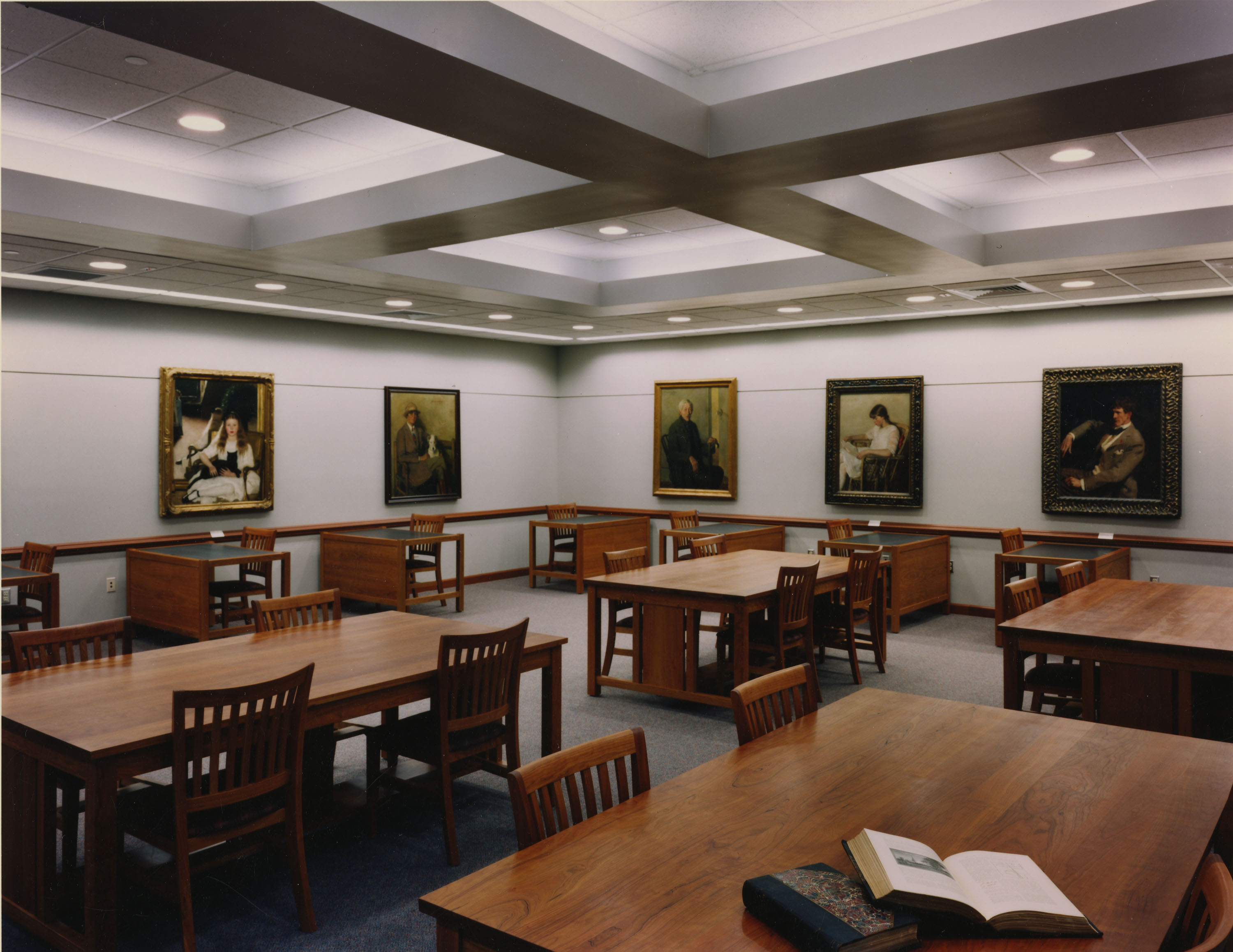
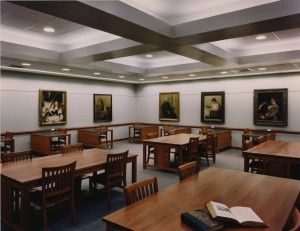
John P. McDonald Reading Reading Room, Archives & Special Collections

Below is a list of collections that are now open and available for research (links to finding aids provided), arranged by broad collecting area.  Researchers are encouraged to contact the staff with any questions.

Business, Railroad  & Labor Collections:

AFSCME, Local 1303  Records https://archivessearch.lib.uconn.edu/repositories/2/resources/49

  • Articles related to a strike by employees of the Milford Mental Health Clinic in 1983.

Bartholomew Alpress & Co. Records  https://archivessearch.lib.uconn.edu/repositories/2/resources/123

  • Record books of the saw mill located in Bristol, Connecticut.

Iron Workers Association of Reading, PA  https://archivessearch.lib.uconn.edu/repositories/2/resources/924

  • Notebook with handwritten constitution and by-laws of association.

Norwich Typographical Union Records https://archivessearch.lib.uconn.edu/repositories/2/resources/84

  • Financial records of the Union.

Providence & Worcester Railroad  Records https://archivessearch.lib.uconn.edu/repositories/2/resources/832

  • Treasurer’s accounts, treasury books, superintendent’s letters, deeds, and other administrative files.

William B. Young Collection of the Connecticut Co. https://archivessearch.lib.uconn.edu/repositories/2/resources/911

  • Correspondence, maps, photographic images, car rosters, administrative reports, and other materials about trolley and street railroad cars and the history of the Connecticut Company.

Children’s Literature Collections:

Martha G. Alexander  Papers https://archivessearch.lib.uconn.edu/repositories/2/resources/851

  • Manuscripts, dummies, and proofs for a significant number of published works by noted children’s author.

Paul W. Catanese  Papers  https://archivessearch.lib.uconn.edu/repositories/2/resources/899

  • Manuscripts and correspondence associated with two of Mr. Catanese’s books, “The Brave Apprentice” and “The Thief and the Beanstalk.”

Bonnie Christensen  Papers https://archivessearch.lib.uconn.edu/repositories/2/resources/71

  •  Original illustrations, woodcut blocks, research materials, and manuscript materials associated with the children’s author.

Stephanie Clayton Collection of Little Red Riding Hood https://archivessearch.lib.uconn.edu/repositories/2/resources/914

  • Assorted realia related to, and depicting, the Little Red Riding Hood Fairy Tale. The collection contains stuffed animals, dolls, porcelain figures, and a clock.

Joanna Cole Papers           https://archivessearch.lib.uconn.edu/repositories/2/resources/852

  •  Editorial correspondence, manuscripts and sketches of Cole, author of the Magic School Bus series.

Mary DePalma Papers        https://archivessearch.lib.uconn.edu/repositories/2/resources/873

  • Materials used to create several of Ms. DePalma’s works, such as My Chair,  The Strange Egg,  Many Millions of Leaves,  A Grand Old Tree,  The Perfect Gift, and  The Nutcracker Doll.

Mary Greenwalt Papers      https://archivessearch.lib.uconn.edu/repositories/2/resources/919

  • Illustrations of her works on the lives of famous composers published between 1936 and 1946.

Mary Ann Hoberman Papers https://archivessearch.lib.uconn.edu/repositories/2/resources/115

  • Manuscripts, original artwork, poetry, and various administrative records associated with the work of award winning children’s author.

Nonny Hogrogian  Papers     https://archivessearch.lib.uconn.edu/repositories/2/resources/35

  • Illustrations, drawings, and proofs of works by children’s book author and illustrator.

Kathy Jakobsen Papers      https://archivessearch.lib.uconn.edu/repositories/2/resources/853

  • Artwork, audio visual materials, books, color slides, correspondence, drawings, illustrations, photographs, posters, publications, sketches, and videocassettes documenting the work of one of America’s premier folk artists.

David Katz Papers              https://archivessearch.lib.uconn.edu/repositories/2/resources/896

  • Materials relating to Katz’s publication You can be a woman engineer published in 1995.

Judith Liberman Papers      https://archivessearch.lib.uconn.edu/repositories/2/resources/850

  • Correspondence and original manuscript materials of artist and author.

Arnold Lobel Papers           https://archivessearch.lib.uconn.edu/repositories/2/resources/831

  • Original text and artwork produced by children’s book author and illustrator.

William MacKellar  Papers  https://archivessearch.lib.uconn.edu/repositories/2/resources/510

Movable Book Society Records  https://archivessearch.lib.uconn.edu/repositories/2/resources/898

  • Records of the Society.

Society of Children’s Book Writers & Illustrators (NE) Records https://archivessearch.lib.uconn.edu/repositories/2/resources/907

  • Records of the Society.

Catherine Stock Papers      https://archivessearch.lib.uconn.edu/repositories/2/resources/849

  • Works of art, dummies, and gallery proofs.

Weston Woods  Records    https://archivessearch.lib.uconn.edu/repositories/2/resources/212

  • 25 animation celluloids used in the creation of children’s filmstrips by the Weston Woods Studio.

Hans Wilhelm Papers https://archivessearch.lib.uconn.edu/repositories/2/resources/112

  •  Dummies, illustrations, books (4), works of art, preliminary sketches, photographs, fliers, posters, ephemera (calendars), and postcards related to Hello Sun!

Human Rights Collections:

Adam Nadel Photography Collection  https://archivessearch.lib.uconn.edu/repositories/2/resources/780

  • Large scale photography by Pulitzer Prize nominated photojournalist.

Diana Rios Collection of Ethnic Press Newspapers  https://archivessearch.lib.uconn.edu/repositories/2/resources/843

  • Ethnic newspapers from across the United States that are made available for teaching purposes.

World Education Fellowship Records  https://archivessearch.lib.uconn.edu/repositories/2/resources/39

  • Administrative records, correspondence, fliers, notes, and transcripts from 1969-1992.

A. B. Xuma Papers             https://archivessearch.lib.uconn.edu/repositories/2/resources/170

  •  Microfilm version of papers of anti-apartheid activist A. B. Xuma.

Literary Collections:

Merrill Gillespie Papers       https://archivessearch.lib.uconn.edu/repositories/2/resources/396

  • Correspondence from Michael Rumaker to Merrill Gillespie.

Oliver Jensen Papers https://archivessearch.lib.uconn.edu/repositories/2/resources/830

  • Personal and professional papers of Oliver Ormerod Jensen, writer, editor, self-taught historian, and railroad enthusiast.

Harriet Slavitz Papers  https://archivessearch.lib.uconn.edu/repositories/2/resources/119

  • Manuscripts, journals, notebooks correspondence and audio recordings of poet, essayist, freelance writer, book editor, and instructor.

Photograph Collections:

Mary Lou Estabrook Photographs  https://archivessearch.lib.uconn.edu/repositories/2/resources/876

  • Documents the photographic work of Mary Lou Estabrook in her capacity as Associate Editor and Chief Photographer of the Lakeville Journal, 1971-1986.

Political & Public Polling Collections, Personal papers:

Alumni Legislators Collection  https://archivessearch.lib.uconn.edu/repositories/2/resources/85

  • Ephemera, fliers, photographs, postcards, publications, and realia related to Connecticut State Legislators who were graduates of the University of Connecticut.

Arthur W. Fanta Papers https://archivessearch.lib.uconn.edu/repositories/2/resources/920

  • Reflects his work at the Nuremberg War Trials from 1945-1948.

Camille Forman Papers  https://archivessearch.lib.uconn.edu/repositories/2/resources/153

  • Administrative records, clippings, correspondence, ephemera, galley proofs, and financial records of local author.

Sam Gejdenson Papers  https://archivessearch.lib.uconn.edu/repositories/2/resources/889

  • Congressional records of Sam Gejdenson, U.S. Representative from Connecticut’s 2nd Congressional district, 1981-2000.

Paul K. Perry Papers  https://archivessearch.lib.uconn.edu/repositories/2/resources/205

  • Correspondence, reports, studies, polls and similar materials related to the personal and professional interests of noted Gallup organization employee.

John Rowland Papers https://archivessearch.lib.uconn.edu/repositories/2/resources/66

  • Congressional records from 1985 to 1991 from Connecticut’s fifth district, including constituent correspondence from 1985 to 1990, campaign and congressional newsletters, press releases, and legislative profiles.

Charles Towne Papers  https://archivessearch.lib.uconn.edu/repositories/2/resources/78

  • Note cards, indexed alphabetically, and by subject of city editor of the Hartford Courant for 47 years.

Dexter Wilcomb Papers (Connecticut Soldiers Collection) https://archivessearch.lib.uconn.edu/repositories/2/resources/6

  • World War II memorabilia donated by Technician Third Grade, Dexter Wilcomb.

Jerry Wagner Political Collection  https://archivessearch.lib.uconn.edu/repositories/2/resources/98

  •  Materials from the political campaigns of Emilio Daddario and Hubert Humphrey and aspects of the political career of Toby Moffet

University Archives:

4-H Clubs of CT Records  https://archivessearch.lib.uconn.edu/repositories/2/resources/859

  • Numerous club publications, photographs, scrapbooks, slides, film, and administrative records of the 4-H Clubs of Connecticut which originated in 1913 with the establishment of the first club in Mansfield, Connecticut.

Accreditation Records https://archivessearch.lib.uconn.edu/repositories/2/resources/95

  • Administrative records pertaining to the University’s accreditation by the New England Association of Schools and Colleges.

Floyd Bass Collection of John E. Rogers https://archivessearch.lib.uconn.edu/repositories/2/resources/48

  • Clippings, sound recordings, books, an honorary degree, and research posters relating to Dr. John E. Rogers collected by Dr. Bass.

Norman Bender Papers  https://archivessearch.lib.uconn.edu/repositories/2/resources/917

  • Correspondence, notes, articles and publications created or collected by Mr. Bender during his tenure in the University of Connecticut, Cooperative Extension Service.

Richard D. Brown Papers https://archivessearch.lib.uconn.edu/repositories/2/resources/211

  • Course materials, student records and recommendations, papers and presentations, professional associations, and grant applications of UConn History professor Richard D. Brown.

Cell Stress Society International Records  https://archivessearch.lib.uconn.edu/repositories/2/resources/213

  • Records documenting the establishment, management, development and growth of the Cell Stress Society International and its associated journal publication on the Storrs campus of the University of Connecticut from 1995 to the present.

College of Agriculture and Natural Resources Records https://archivessearch.lib.uconn.edu/repositories/2/resources/179

  • Records of the College of Agriculture and Natural Resources.

Computing Committee Records  https://archivessearch.lib.uconn.edu/repositories/2/resources/57

  • Correspondence, clippings, administrative reporting, committe proceedings, notes, fliers (handouts), and publications related to the Computing Committee and their involvement in UCINFO.

Office of Institutional Research Records  https://archivessearch.lib.uconn.edu/repositories/2/resources/869

  • Administrative records, reports and clippings.

Ombudsman’s Office records https://archivessearch.lib.uconn.edu/repositories/2/resources/182

  • Administrative records, fliers, news clippings, and legal documents from the period the office existed at the University.

Poetic Journeys Collection  https://archivessearch.lib.uconn.edu/repositories/2/resources/104

  • Posters from the Poetic Journeys Galleries from 2000-2004.

Puerto Rican and Latino Studies Institute Records  https://archivessearch.lib.uconn.edu/repositories/2/resources/901

  • Correspondence, minutes, printed materials, and financial records of the Institute.

Carl W. Rettenmeyer Papers  https://archivessearch.lib.uconn.edu/repositories/2/resources/208

  • Correspondence and field notes of noted biologist.

Cynthia Reeves Snow Collection  https://archivessearch.lib.uconn.edu/repositories/2/resources/148

  • Diploma, report card, dance program and publications from one of the early female graduates of the University.

Storrs Agricultural Experiment Station Records https://archivessearch.lib.uconn.edu/repositories/2/resources/40

  • Administrative records of one of the oldest agricultural experiment and research stations in the United States.

Storrs Draft Information Committee Records  https://archivessearch.lib.uconn.edu/repositories/2/resources/64

  • Administrative records, correspondence, legal documents, fliers, notes, and publications of the committee.

University Communications Office Records  https://archivessearch.lib.uconn.edu/repositories/2/resources/113

  • Files of the Office.

University of Connecticut Professional Employees Association (UCPEA) Collection https://archivessearch.lib.uconn.edu/repositories/2/resources/174

  • Administrative records, correspondence, legal documents, financial records, publications, and fliers (pamphlets, handouts, announcements), related to the Association.

University Poster Collection  https://archivessearch.lib.uconn.edu/repositories/2/resources/138

  • Posters documenting University events, particularly athletic activities, from 1969-2012.

ALA Awards go to several CT Children’s Book Fair folks and one NCLC donor!

Congratulations to several of our CT Children’s Book Fair folks for their prestigious awards at ALA this morning!
E. B. Lewis, Coretta Scott King Honor Book for Each Kindness and Bryan Collier, Coretta Scott King Illustrator for I, Too, am America;
Sonia Manzano, Pura Belpre Honor Book for The Revolution of Evelyn Serrano;
Mo Willems, NCLC donor, Geisel Honor for Let’s Go for a Drive ;
and Leslea Newman, Stonewall Honor Book for October Mourning.

Katie Davis exhibit

[slideshow_deploy id=’730′]The Katie Davis exhibit in the Dodd Research Center Gallery will be coming down on February 22, 2013, in the early morning.  So if you haven’t seen it yet, you’ll want to come in soon.  It’s a wonderful exhibit documenting Katie’s creative process.  And, trust me, is she ever creative.