About Laura Smith

Archivist

Brass City/Grass Roots exhibit highlights Waterbury’s agricultural past

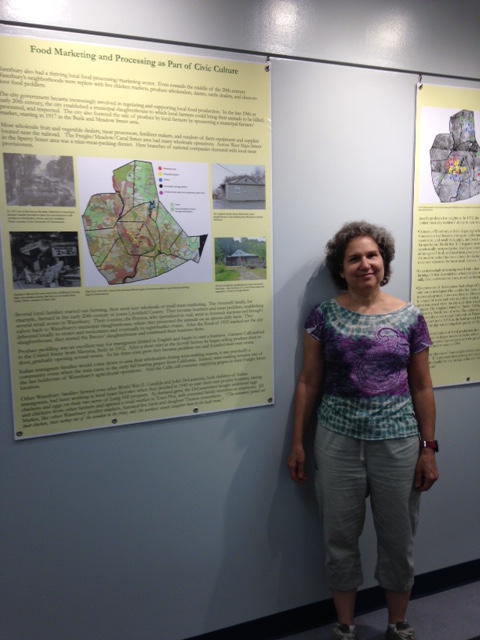
Professor Ruth Glasser and her exhibit Brass City/Grass Roots, on display at the Thomas J. Dodd Research Center in June and July, 2015

Professor Ruth Glasser and her exhibit Brass City/Grass Roots, on display at the Thomas J. Dodd Research Center in June and July, 2015

Now available in the Dodd Research Center corridor is the exhibit Brass City/Grass Roots, which tells the story of Waterbury, Connecticut’s little known agricultural past.

Created by UConn Assistant Professor in Residence Ruth Glasser, who teaches in the Waterbury campus’s Urban and Community Studies Program, the exhibit boards beautifully detail the rich history of farming in Waterbury, with photographs, quotes from interviews of members of farming families, and historical documents.

The exhibit shows that Waterbury, best known as the “Brass City” due to its wide renown as an industrial center, has had far more farms and farmers than may have been previously supposed. As Dr. Glasser writes in the exhibit: “Farming did not disappear when the first factories started. But farmers have had to constantly reinvent themselves as they faced hilly land, rocky soil, mechanization, and competition in an increasingly tough regional, national, and international market.” Presently the city has a wealth of community gardens and greenhouses, and thousands of vegetables are raised for personal use as well as for soup kitchens.

Dr. Glasser began her research for the project in 2013, when she connected with Sue Pronovost, the Executive Director of Brass City Harvest, a non-profit organization that alleviates food deserts in the city and educates city residents about the legacy of farming and the present opportunities for farming in the city. In her efforts to gather sources for the project Dr. Glasser spoke on local radio programs, gave presentations, and conducted interviews. She conducted extensive research into land records in the town clerk’s office, consulted historical maps, and studied photographs from private collections as well as from such cultural heritage institutions as the Mattatuck Museum, the Connecticut Historical Society, and the Silas Bronson Library. She also was able to access the archive of Waterbury’s local newspaper, the Republican-American.

With funding from the Connecticut Humanities Fund, the Connecticut Community Foundation, and the Waterbury Environmental Benefits Fund, and with the assistance of students in her Historical Methods seminar, Dr. Glasser wrote the exhibit script and captions, chose preferred photographs for the boards, and worked with a designer on the look of the exhibit panels. Last summer the exhibit was shown at local farmers markets, and has been available at UConn’s Torrington and Waterbury campuses.

The exhibit will be up in the corridor until July 31.
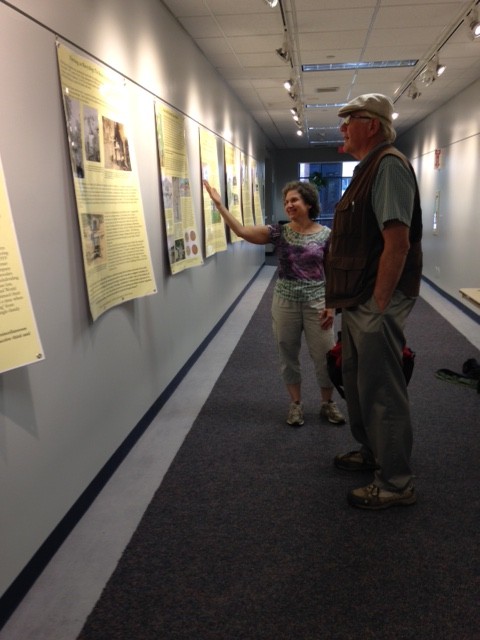
UConn Professor Ruth Glasser shows her exhibit Brass City/Grass Roots to UConn Libraries staff member Bill Miller, June 2015
UConn Professor Ruth Glasser shows her exhibit Brass City/Grass Roots to UConn Libraries staff member Bill Miller, June 2015
New York Times letter to the editor, by J. W. Swanberg

We enjoyed reading a May 23 letter to the editor, “History and Safety on the Railroad,” in the New York Times by our railroad friend, supporter and donor J.W. (Jack) Swanberg, where he explains that historically the railroads in the United States have had to build their own stations and right-of-way without any kind of public support, unlike public roads and the airline industry.  Jack certainly writes from his own personal knowledge of railroad history, as the author of New Haven Power, a history of the New York, New Haven & Hartford Railroad’s engines and other motive power, and numerous articles in railroad magazines on a myriad of railroad history topics.

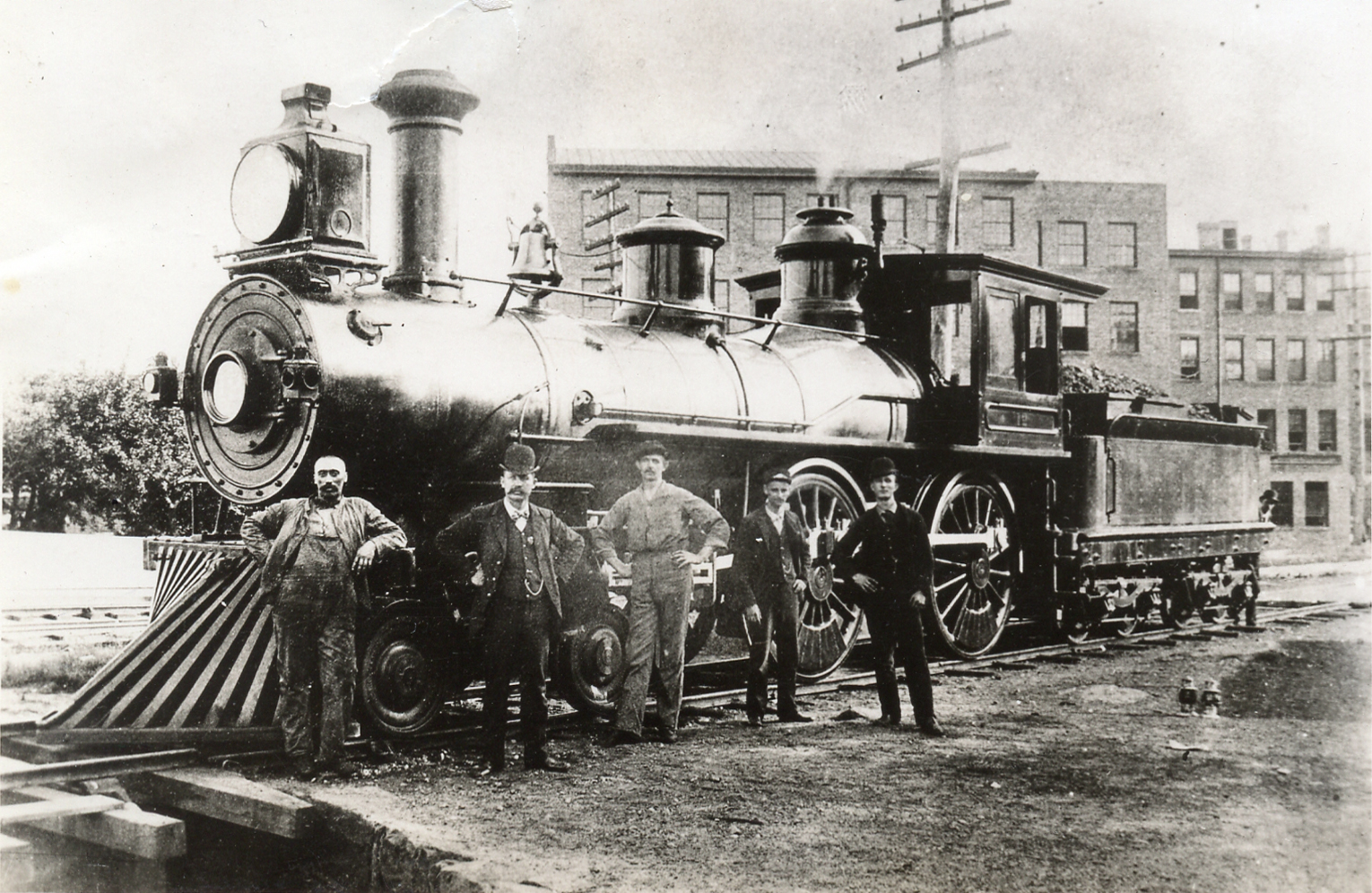
1881, Housatonic Railroad locomotive and crew

1881, Housatonic Railroad locomotive and crew

Winners of the Archives & Special Collections prize for Connecticut History Day

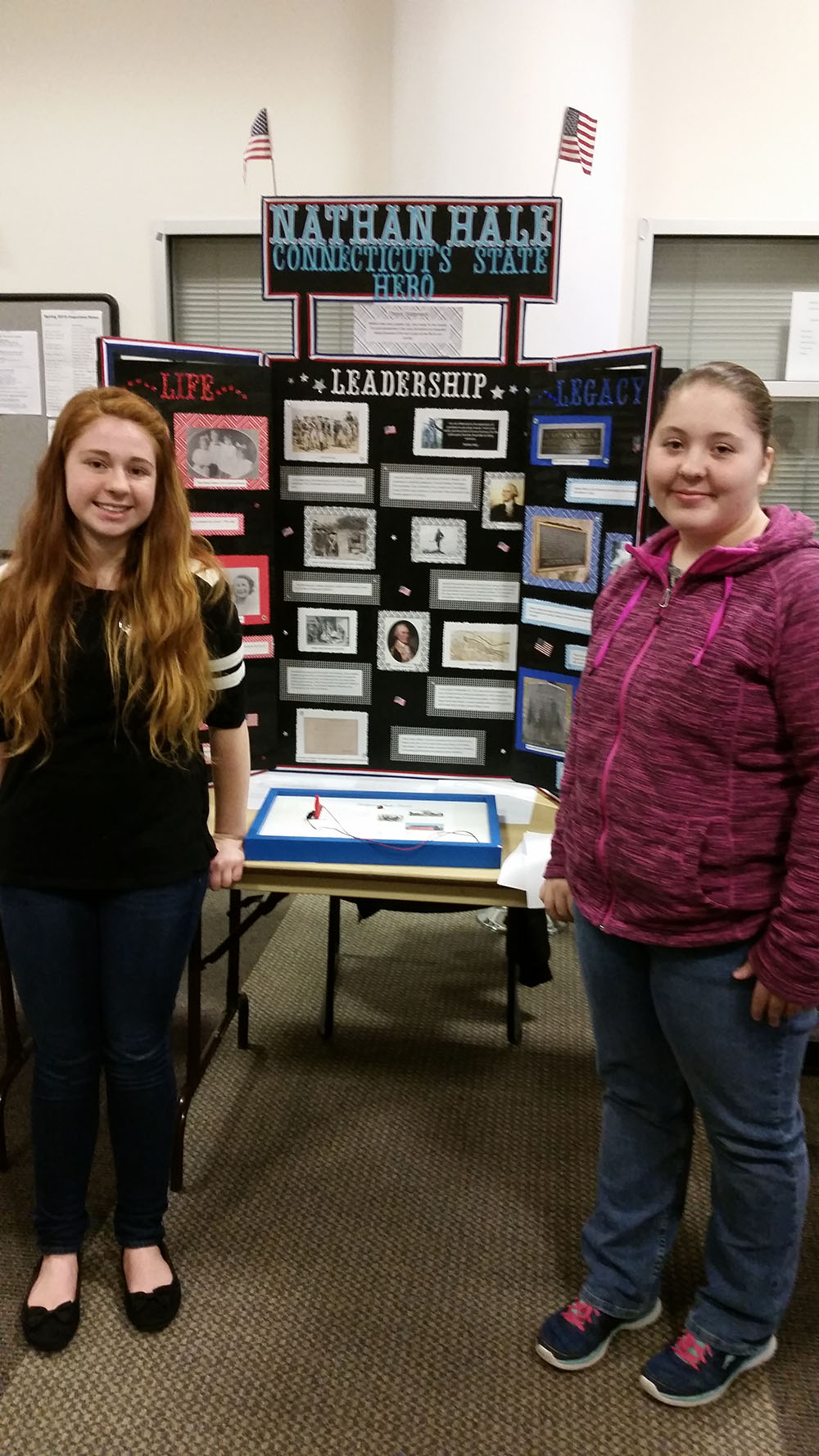
Victoria Farrell and Kayla Gobar

Victoria Farrell and Kayla Gobar

Congratulations to Victoria Farrell and Kayla Gobar of New Britain High School, winners of the Archives & Special Collections of the UConn Libraries special prize for projects on Connecticut Leaders and Leadership, which they won at the May 9, 2015, Connecticut History Day contest held at Central Connecticut State University.  The girls won the prize for their project “Nathan Hale: Connecticut’s State Hero.”  We are very happy such an interesting topic was awarded the prize, which is a gift certificate to the UConn Bookstore.

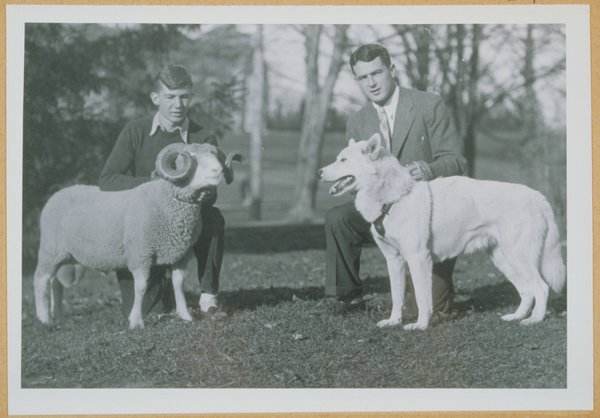
UConn’s mascot — a ram?

UConn mascot

It’s a little known historical fact that in the mid-1930s, when the Connecticut State College (an earlier name for what became the University of Connecticut) was pondering what would be its mascot, the ram shown above, named Sir Ram-a-lot, was seriously considered, edging out in student polling over the next most likely mascot, the Eskimo husky dog known as Jonathan.  The student newspaper quoted freshman Francis Pickering as saying “What kind of stupid name is Jonathan for a dog?  I think Sir Ram-a-lot would invoke the kind of fear and respect we need on the football field against opposing teams.”  Fortunately the students’s preference for the ram was contested by the new college president, Albert N. Jorgensen, who made the decision to allow the animals to decide between themselves with a vigorous game of rock/paper/scissors.  Jonathan was victorious, thus beginning his eighty year reign as UConn’s beloved mascot.

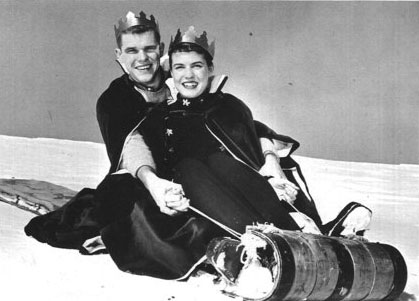
[We hope you enjoyed this April Fool’s Day post.  For the real story of what’s going on in this photo, visit our digital repository and see the photo at http://hdl.handle.net/11134/20002:199722613

Civil War diaries in the digital repository

The digital repository is growing at a record pace, with materials from almost every subject area within our collections.  Some of the latest items you will find in the repository are several Civil War diaries, in the Connecticut Soldiers Collection.

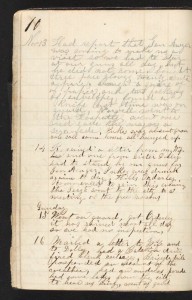
Page from the diary of D. Alonzo Smith

Page from the diary of D. Alonzo Smith

The diary of D. Alonzo Smith of Torrington, Connecticut, gives us an inside look at his service with the 19th Connecticut Regiment from 1862 to 1864.  Smith served as a prison guard at Fort Ellsworth, Virginia.  Above is a page from his diary where he writes “Received a letter from my Wife. a sorce of Comfort.”

The diary of Christopher Boon of Westbrook, Connecticut, tells us that he was wounded in May 1863, with details of his convalescence at a VR hospital in New Haven, Connecticut.

John L. Sage from  Cromwell, Connecticut served with Company D, 24th Connecticut Regiment. His diary includes entries from  Louisiana and  Mississippi dating from September 1862 through September 1863.

Gurdon Robins, Jr., of  Hartford, Connecticut, documents battle and camplife in 1863, followed by his experiences as a prisoner of war in Libby Prison. 

Rollin Charles Williams, UConn’s first African-American professor

Faculty and staff at UConn's School of Social Work, ca. late 1950s

The first African-American professor at the University was Dr. Rollin Charles Williams, who was served as a professor in the School of Social Work from 1957 to his retirement in 1985.

Born in 1922 in Kansas City, Missouri, Dr. Williams was raised in Tulsa, Oklahoma, graduating from high school as its valedictorian and solo violinist in its orchestra. He graduated from Howard University and served in the U.S. Army during World War II, where he earned the rank of sergeant major. He earned his master’s degree in social work from Boston University and then worked as a medical and psychiatric social worker for the U.S. Department of Veterans Affairs. Dr. Williams was the first psychiatric supervisor at Norwich State Hospital. Soon after that he was recruited by UConn to do field training for the School of Social Work, and asked to join the faculty in 1957.

Upon his retirement in 1985 Dr. Williams returned to his first love – music, particularly classical and operas. When he died in September 2012, at the age of 90, UConn President Susan Herbst wrote that he “exemplified the highest ideals of service, scholarship and integrity, and [left] a legacy that we can all strive to emulate.”

This photograph, from the late 1950s, shows Dr. Williams third from the right. The man who is third from the left is Harleigh Trecker, dean of the School of Social Work from 1951 to 1968.

Harrison Fitch, the first African-American basketball player at Connecticut State College

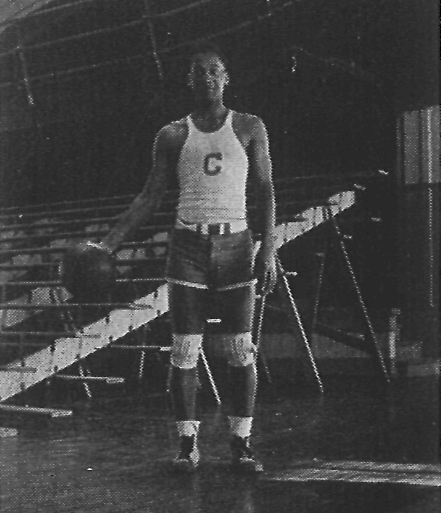
Harrison "Honey" Fitch, the first African-American basketball player at the Connecticut State College, 1934

Harrison B. “Honey” Fitch was a basketball standout at his high school in New Haven, and in 1932 enrolled as a freshman at the Connecticut State College (the name changed later to the University of Connecticut).  He was a strong member of the CSC basketball team yet endured racism and harassment at times from the players of opposing teams, most notably in a game, on January 27, 1934, against the U.S. Coast Guard Academy in New London.  The Academy refused to play the game if Fitch was on the court, arguing, as Mark Roy wrote in the February 2, 2004, UConn Advance, that “because half of the Academy’s student body was from the southern states, they had a tradition ‘that no negro players be permitted to engage in contests at the Academy.'”

Fitch’s teammates threatened to leave the basketball court if he was not allowed to play, and Fitch joined them in warming up for the game, while the officials argued and delayed the start of the game for several hours.  Although the Coast Guard relented, and CSC won the game 31 to 29, the team’s coach, John Heldman, inexplicably kept Fitch on the bench the entire game.

Fitch left CSC at the end of the 1934 academic year and transferred to American International College in Springfield, Massachusetts.  He then worked in research for the Monsanto Corporation, married in 1939 and had two sons, and died in the early 1990s.  His son, Brooks Fitch, told Mark Roy that his father told him he had a good experience as a student at the CSC and was always a fan of UConn basketball.

Alan Thacker Busby, the university’s first African-American student

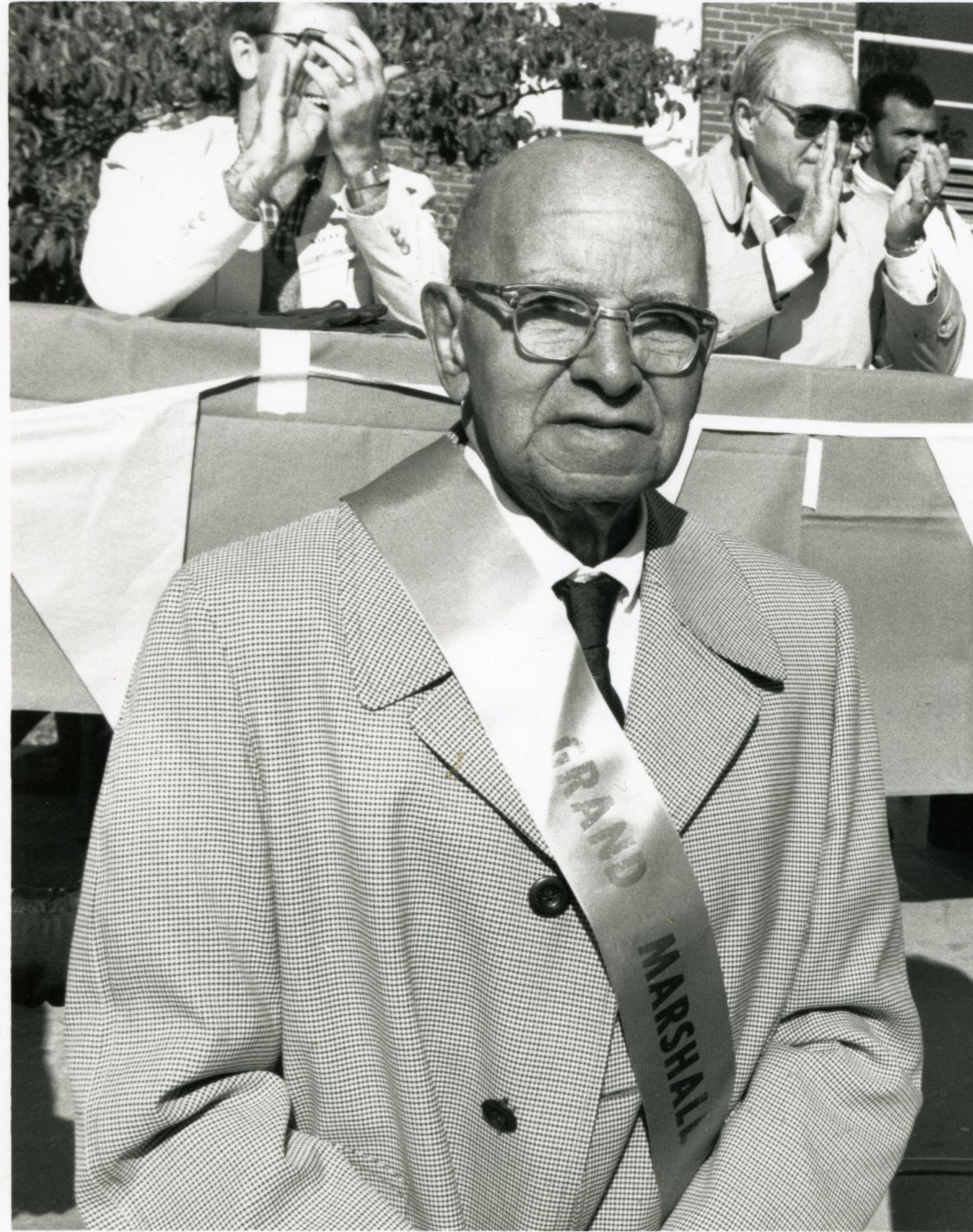
Alan Thacker Busby, the university's first African-American student, 1990

In 1914 Alan Thacker Busby of Worcester, Massachusetts, enrolled at the Connecticut Agricultural College, the first African-American student to attend what would become the University of Connecticut.  He worked his way through college by milking cows, feeding hogs and cutting ice from the campus pond and was an honor student and a member of the football team his Junior year.  In 1918 became the college’s first African-American graduate. After he graduated from college he served in World War I as a member of the Army’s all-black Field Artillery Unit, which stayed in France months after the war ended. After his military service he was an Animal Husbandry professor at Bordentown Industrial School in New Jersey, Alcorn Agricultural and Mechanical College in Alcorn, Mississippi, and Lincoln University in Jefferson City, Missouri.

Busby Suites, a dormitory on the Storrs campus, was named in his honor.

This photograph shows Prof. Busby back at the University of Connecticut, when he returned to his alma mater in Fall 1990 to act as Grand Marshall of the Homecoming Parade.