
The current system for communicating research is rooted in a print-based system, even though we are in the digital age. This conventional model does not take advantage of the extraordinary new possibilities for how researchers can create, share, and access scholarship.
Here at the UConn Library, one of the tenets of our Purposeful Path Forward is to engage in the driving of UConn’s ‘Scholarly Engine’, or the processes of research and knowledge creation. One of the core activities in our approach is educating our community on the importance of Open Access. Open Access (OA), as defined by SPARC (the Scholarly Publishing and Academic Resources Coalition), refers to the “free, immediate, online availability of research articles, coupled with the rights to use these articles fully in the digital environment.”
Why Open? Open changes the way we discover knowledge. It can turn ideas into reality, break down barriers to learning, and lay the groundwork for breakthrough research.
 This month we are embracing the challenge provided by the 2017 International Open Access Week by answering the question, “Open in order to…” through a series of programs and initiatives.
OpenCommons@UConn
The UConn Library is proud to announce the re-launch of the University’s institutional repository, OpenCommons@UConn, a showcase of the scholarship and creative works of the UConn community. The renaming of this services emphasizes the Library’s role in providing the tools to enable independent learning, research, and scholarship. By making the University’s diverse and unique resources openly accessible worldwide, we hope to inspire groundbreaking research and advance learning, teaching, and entrepreneurial thinking.
Open in order to…provide access to UConn’s scholarship
Open Educational Resources @ UConn Exhibit: published teaching and learning materials under an open license
October 18-31, 2017
HBL, Plaza Level
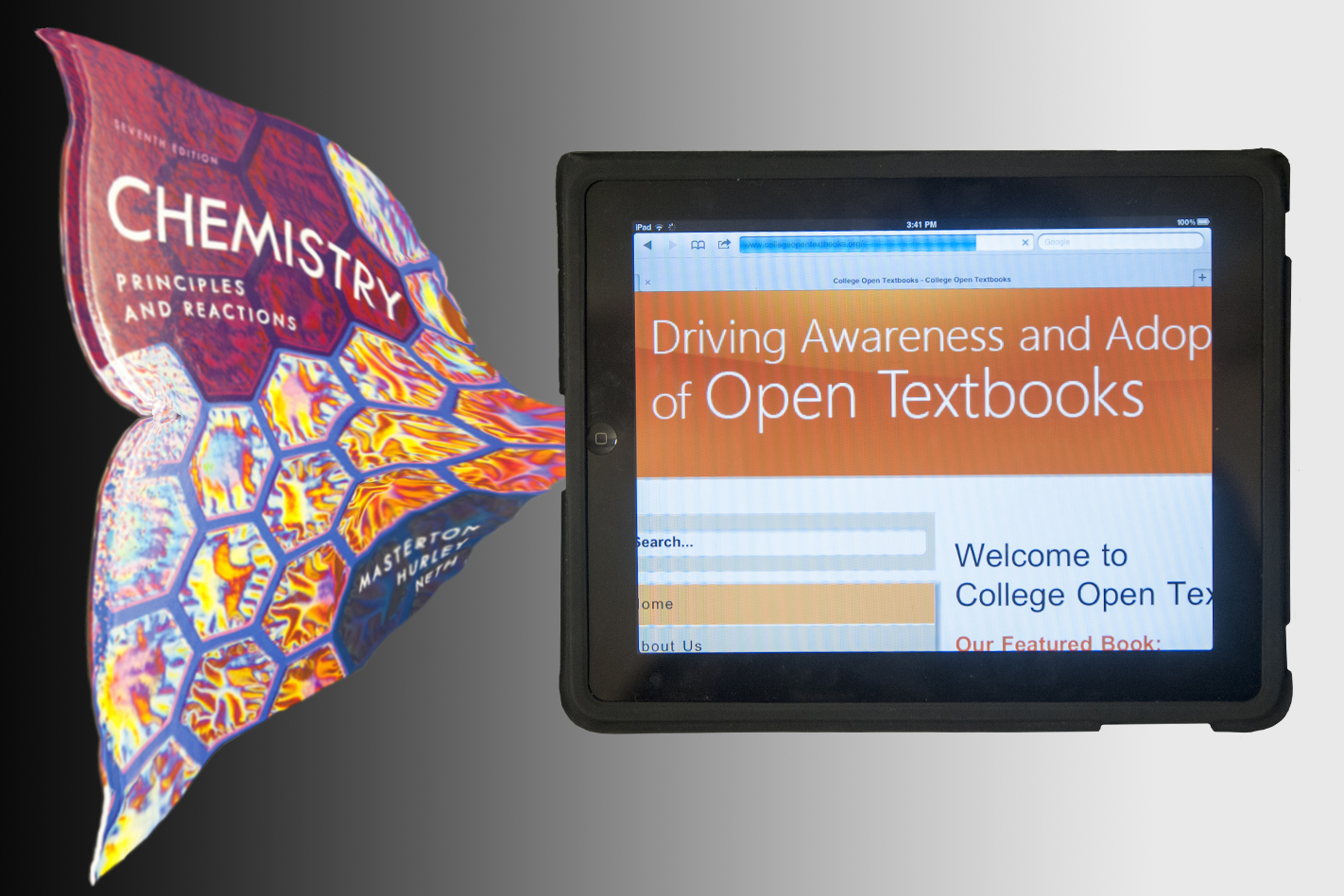
Open Access and Open Educational Resources (OER) are related but distinct, with the commonality of providing high quality learning materials at no cost. In an academic setting, the lines of Open Access publishing for research materials and Open Educational Resources for teaching and learning overlap in significant ways. UConn’s OER Initiative began only 2 years ago and to date has saved our undergraduates over $500,000 in textbook costs. View some OER textbooks and learn more about the faculty who are working towards making UConn more affordable.
Open in order to…save students money
Is this open access journal any good?
Thursday, October 19, 9:30-11:00am
Homer Babbidge Library, Collaborative Learning Classroom
Faculty often struggle to identify good quality open access journals in which to publish or to serve as an editor or reviewer. Many new open access journals exist now – some are good quality, some are exploitative, and some are in-between. This workshop will include a brief discussion of faculty concerns about identifying journals. The majority of the session will be devoted to identifying and demonstrating indicator web-based tools which can help faculty to appraise a journal’s quality. Please register at http://cetl.uconn.edu/seminars
Open in order to…find quality teaching materials
Paywall: A Conversation about the Business of Scholarship with Filmmaker Jason Schmitt
Wednesday, October 25, 2:30-4:00pm
Konover Auditorium, Thomas J. Dodd Research Center
Help us celebrate Open Access Week by joining award-winning filmmaker Jason Schmitt as we screen and discuss footage from his in-progress documentary Paywall: The Business of Scholarship. Schmitt will be accompanied in the discussion by a panel of UConn faculty who will share their views on making the results of academic research freely accessible online. Panelists include:
- Johann Peter Gogarten is a Board of Trustees Distinguished Professor in UConn’s Department of Molecular and Cell Biology. He is a Fulbright scholarship recipient and his pioneering research in the field of molecular evolution has appeared in numerous scholarly publications.
- Arnab Roy is a Ph.D. candidate in UConn’s Department of Literatures, Cultures and Languages and he is also a co-editor of the Open Access publication, The Quiet Corner Interdisciplinary Journal. He is currently writing his dissertation, titled Ethical and Empathic Universals in the Study of Indian Literary Traditions.
- Jason Schmitt, the filmmaker.
Co-sponsored by UConn Humanities Institute
Open in order to…talk about the business of scholarship
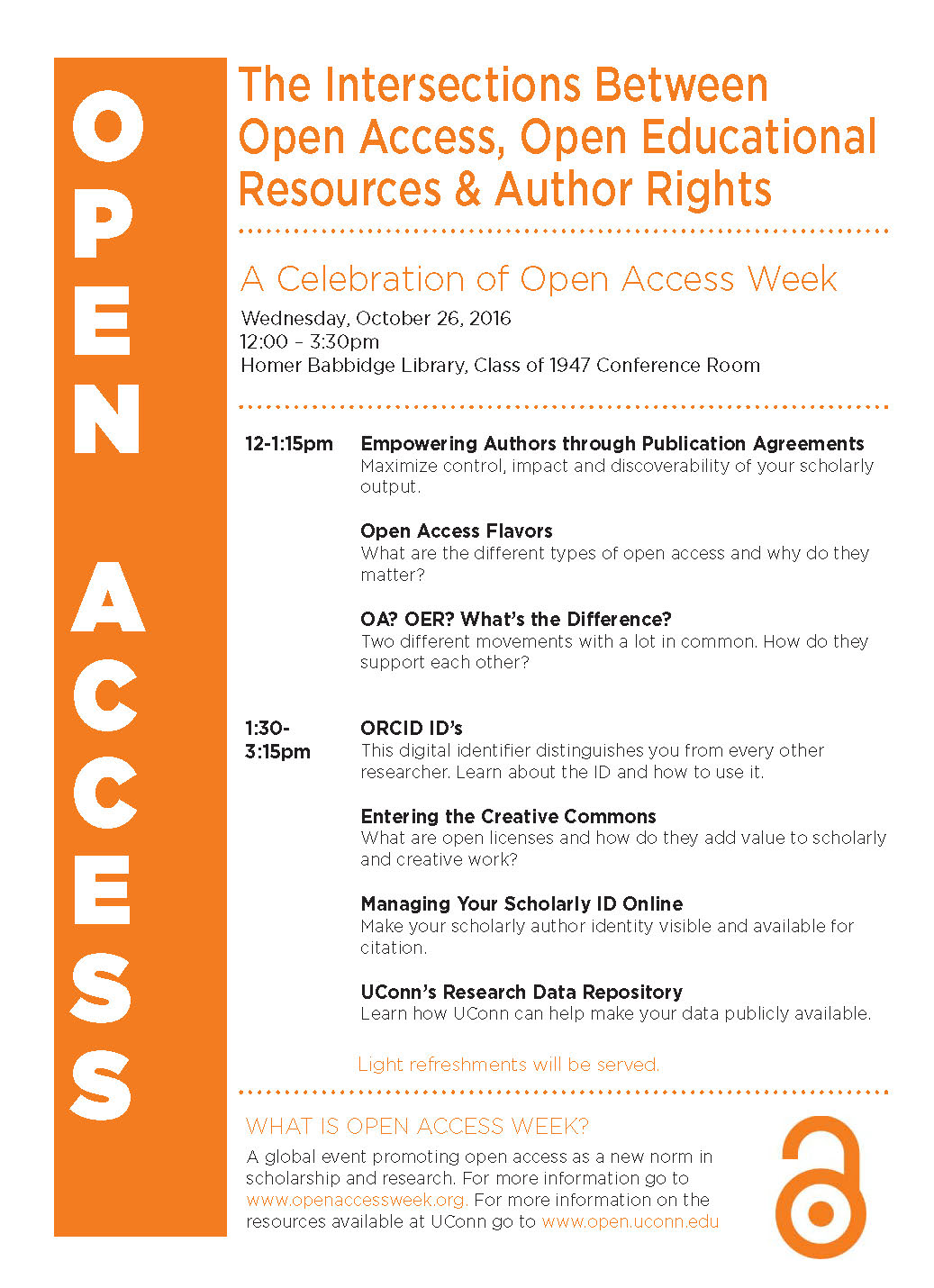
Flyer in pdf
Release in pdf
Open Data In Action
Thursday, October 26, 11:00am-2:00pm
Hartford Public Library Atrium
Open Data In Action brings together a wide range of researchers to showcase how their work has benefited from openly and freely accessible data. Presenters from the public, private, and academic sectors will discuss how open data, ranging from historical documents to statistical analyses, is being used to create projects, change policies, or conduct research and highlight the importance open data has on shaping the world around us.
Opening Remarks:
Tyler Kleykamp, Chief Data Officer, State of Connecticut
Presenters:
- Steve Batt, UConn Hartford/CT State Data Center, Tableau Public and CT Census Data
- Jason Cory Brunson, UConn Health Center, Modeling Incidence and Severity of Disease using Administrative Healthcare Data
- Stephen Busemeyer, The Hartford Courant,Journalism and the Freedom of Information
- Brett Flodine, GIS Project Leader, City of Hartford Open Data
- Rachel Leventhal-Weiner, CT Data Collaborative, CT Data Academy
- Anna Lindemann/Graham Stinnett, UConn/DM&D, & Archives, Teaching Motion Graphics with Human Rights Archives
- Thomas Long, UConn Nursing, Dolan Collection Nursing History Blog
- Tina Panik, Avon Public Library, World War II Newsletters from the CTDA
- Jennifer Snow, UConn Library, Puerto Rico Citizenship Archives: Government Documents as Open Data
- Rebecca Sterns, Korey Stringer Institute, Athlete Sudden Death Registry
- Andrew Wolf, UConn Digital Media & Design, Omeka Everywhere
Co-sponsored by the Hartford Public Library
Open in order to…share data
Flyer in pdf
Introduction to Data Visualization using Tableau Public
Monday, October 30, 3:00-4:15pm
Homer Babbidge Library, Level 2 Electronic Classroom
Tableau Public is a free version of Tableau business intelligence / visual analytics software, which allows anyone to explore and present any quantitative information in compelling, interactive visualizations. In this hands-on session you will work with different prepared datasets to create online interactive bar graphs, scatterplots, thematic maps and much more, which can be linked to or embedded in blogs or on web sites. Please register at http://workshops.lib.uconn.edu/
Open in order to…visualize research
Digital Scholarship: Partnering for the Future
Joan K. Lippincott, Associate Executive Director, Coalition for Networked Information
Tuesday, November 7, 2:30-4:00
Homer Babbidge Library, Humanities Institute Conference Room
Researchers in many disciplines are finding that they can ask new kinds of research questions as a result of the rapid growth in the availability of digital content and tools. In addition, the outputs of their research can include many more types of products such as data visualizations, geo-referenced representations, text augmented with images and audio, exhibits on the web, and virtual reality environments. Developing these projects takes a team of people who have a variety of skill sets. These individuals may come from academic departments, the library, the information technology unit, and other specialties. Graduate and undergraduate students are also often part of teams working on digital scholarship projects. In this presentation, Lippincott will provide an update on developments in digital scholarship and will describe existing programs and projects, discuss the importance of physical space, and encourage the development of a campus digital scholarship community. Co-sponsored by UConn Humanities Institute
Open in order to…develop digital scholarship
Printable Brochure (pdf format) for all of our events
 Martha Bedard, Vice Provost for the UConn Library, will be retiring on July 20, 2017. Vice Provost Bedard has led the library since October, 2013 and during her tenure she has been instrumental in moving the UConn Library forward in several key areas.
 We are excited to kick off
  It would be difficult to find someone more dedicated to the UConn Library’s Archives & Special Collections than Richard Schimmelpfeng. Perhaps it is because of the solid foundation he built beginning with the Special Collections Department after his arrival in 1966. But more likely it is because of his dedication to the collections after his retirement in 1992. Mr. Schimmelpfeng began volunteering in the Archives the day after his retirement and was a daily staple until his recent illness a few months ago. In a March, 2005 article he stated “I intend to continue as a volunteer until either I fall over, am dragged out, or told to quit,” he quips. “I figure I’ve got about 15 more years to go.” We estimate that he worked more than 15,000 volunteer hours over 20+ years. As Norman D. Stevens, Emeritus Director of the UConn Library says in his obituary below, “his fifty years of service to the University of Connecticut is perhaps unsurpassed.”
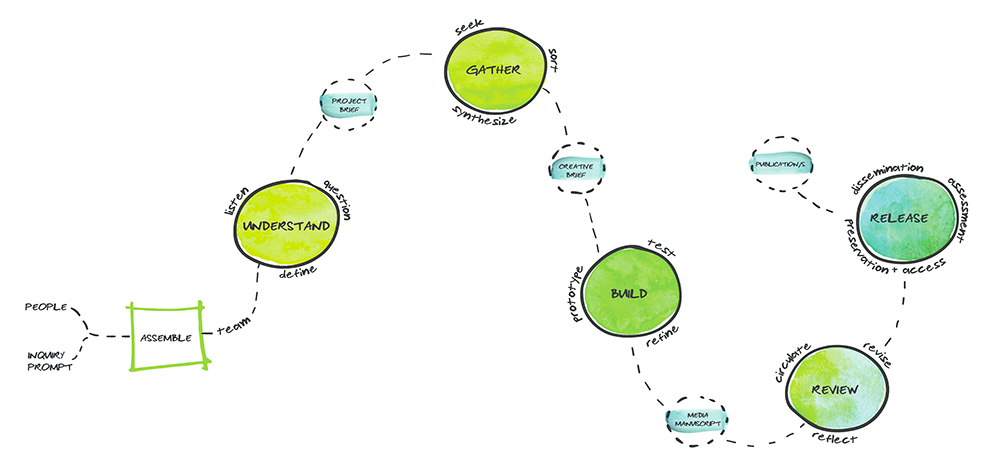
 Greenhouse Studios, a new research unit at the University of Connecticut, is beginning implementation of a collaboration-first approach for the creation and communication of scholarship thanks to a $789,000 grant from the Andrew W. Mellon Foundation. This award is the first of its kind at UConn and part of the Mellon Foundation’s Scholarly Communications program, a multi-pronged effort to accelerate the evolution of scholarly practice and academic publishing to meet the opportunities and challenges of the digital age. Greenhouse Studios is a joint effort of the University Library, School of Fine Arts, and the University of Connecticut Humanities Institute, with each contributing resources and personnel to advance scholarly communications research. “Greenhouse Studios represents the kind of bold commitment to interdisciplinary research that our academic plan identified as central to solving the problems of the 21st century and to cementing UConn’s place as a driver of innovation and excellence within the State of Connecticut and around the world,” says Interim Provost and Executive Vice President for Academic Affairs Jeremy Teitelbaum.